



Yes, you can clean a down comforter at home without turning it into a lumpy, matted mess, and you do not need to hand it to a dry cleaner every time. The trick is a gentle wash, a lot of patience in the dryer, and knowing when your comforter genuinely needs help versus a quick freshen up. As a team that handles bedding every week through our residential cleaning service, we have washed enough duvets to know exactly where people go wrong.
Most ruined comforters are not ruined by the wash. They are ruined by rushing the dry. Down needs to come out completely dry and fully fluffed, or the clusters clump, trap moisture, and start to smell. Here is the full method, plus how to tell whether your comforter is even safe to put in the machine.
In this article
Can You Wash a Down Comforter at Home?
In most cases, yes. The bigger question is whether your washer can handle the load. Down comforters are bulky, and when they soak up water they get heavy fast. A standard top-loader with a centre agitator is the worst tool for the job, because that post twists and stresses the seams. A front-loader or a large capacity top-loader with no agitator gives the comforter room to move and rinse evenly.
Always read the care label first. Some down comforters are dry clean only because of the shell fabric or the baffle construction, not the down itself. If the tag says dry clean only, respect it. If it says machine wash, you are clear to go, and the steps below will keep the fill in good shape.
Quick take: A machine washable down comforter can absolutely be cleaned at home if your washer is large enough to let it tumble freely. If it barely fits, take it to a laundromat with an oversized front-load machine instead of cramming it into a small drum.
What To Check Before Starting
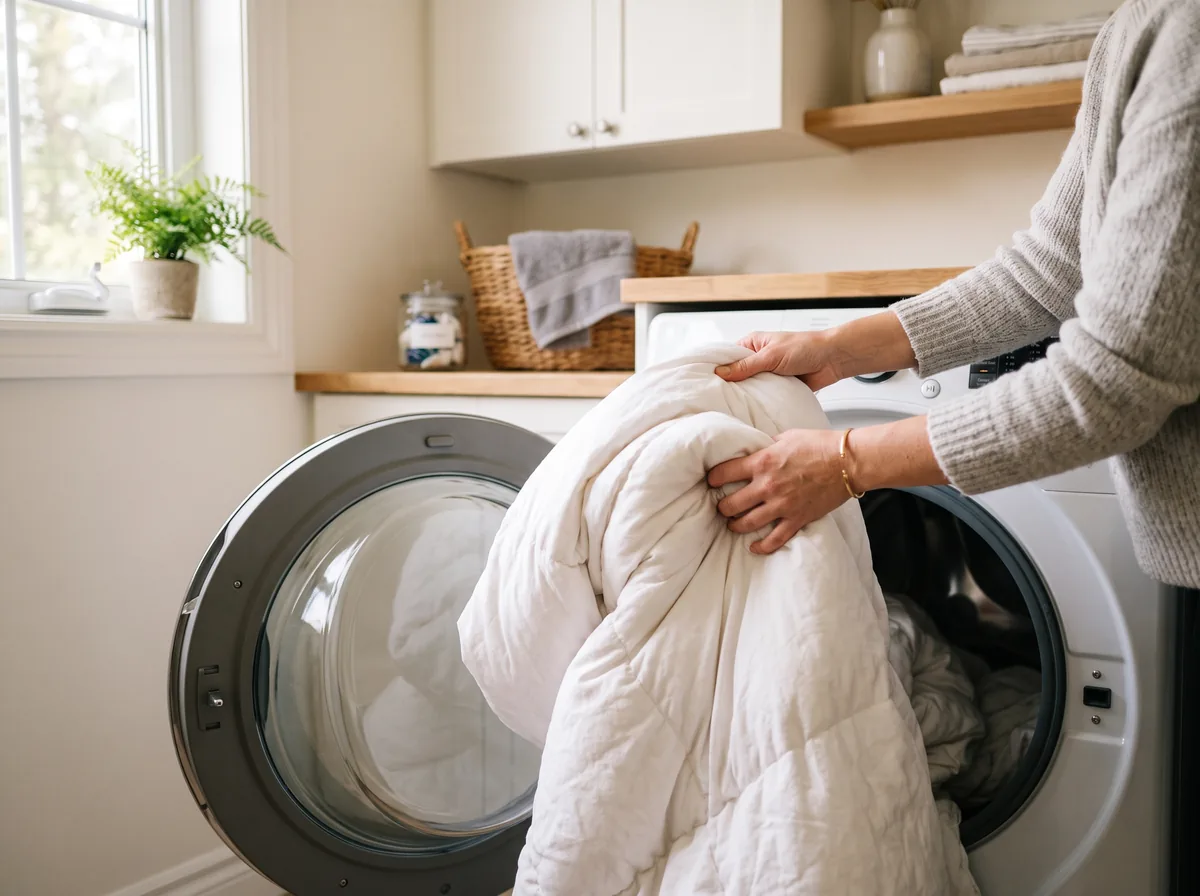
Two minutes of prep saves a comforter. Before anything hits the water, run through this quick check:
- Read the care label and confirm it is machine washable, not dry clean only.
- Inspect the shell for open seams or small holes. Wet down escapes through the tiniest gap, so patch any weak spots first.
- Spot treat stains with a little mild detergent worked in gently with your fingers, not a stiff brush.
- Pick a mild, low-sudsing detergent. Skip fabric softener and bleach, which coat and break down the down clusters.
- Make sure the comforter can move freely in your drum. If you have to force it in, use a larger machine.
Did you know: Down is just very fine feathers, and it loses loft when it is coated in detergent residue or softener. That is why an extra rinse cycle matters more than an extra wash. Clean, residue-free down puffs back up. Coated down stays flat no matter how long you run the dryer.
How to Clean a Down Comforter Step by Step
The steps below are general guidance for machine-washable down comforters only. Always follow the care label on your specific comforter and test any stain treatment on a hidden corner first. Fabrics, fills, and machines vary, and CleanMol is not responsible for damage to items cleaned based on this article. When in doubt, use a professional.
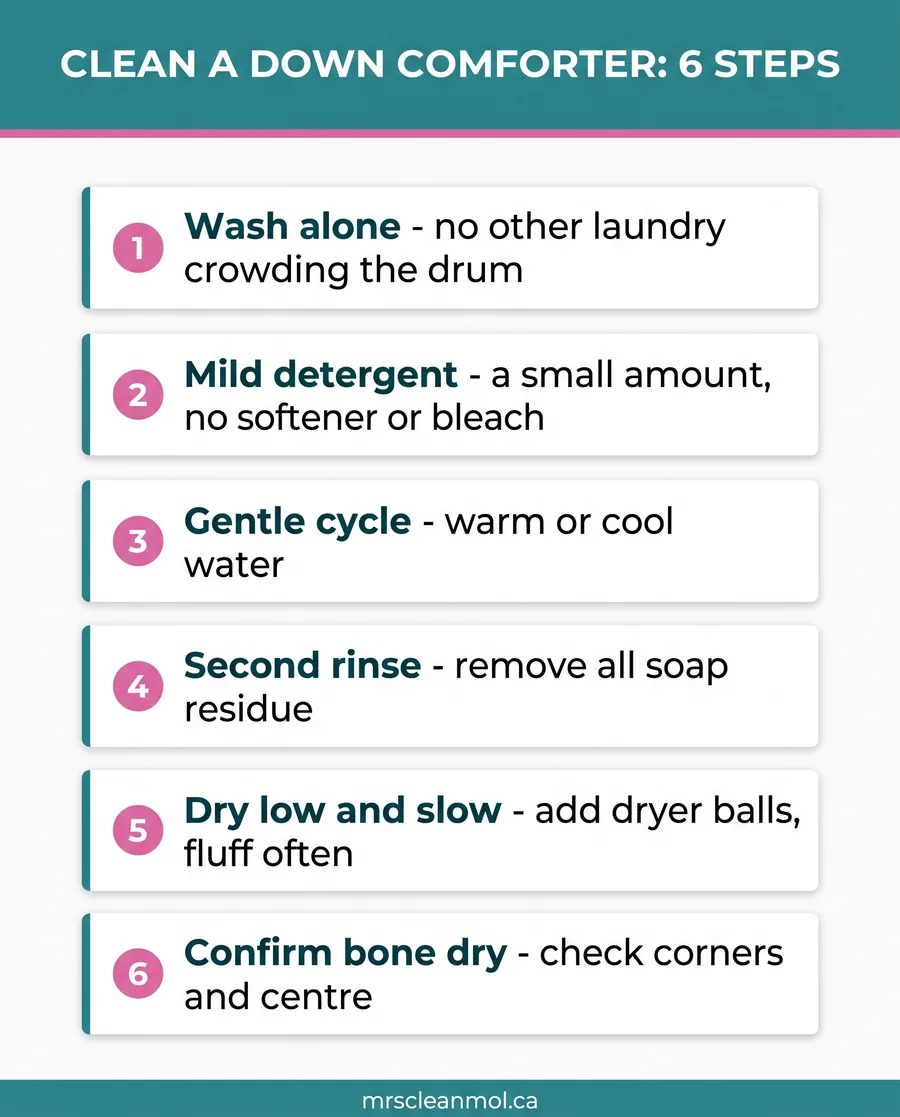
- Wash alone. Put the comforter in by itself so it can move and rinse evenly. No towels, no sheets crowding the drum.
- Use a small amount of mild detergent. More soap means more residue and a harder rinse. Less is genuinely more here.
- Choose a gentle or bulky cycle with warm or cool water. Hot water is hard on down and on some shell fabrics.
- Run a second rinse. This is the step most people skip, and it is the one that saves the loft. Rinse until the water runs clear of suds.
- Balance the spin. A gentle spin removes water, but if the comforter bunches to one side, stop and redistribute it so the machine does not thump.
- Move it to the dryer promptly. Do not let a wet comforter sit, or it can start to smell and mildew within hours.
A well-known bedding retailer's care guide, this manufacturer walkthrough on washing a comforter, echoes the same core rule: gentle cycle, mild detergent, and a thorough rinse. The wash is the easy part. The next section is where comforters are actually made or broken.
Drying a Comforter is Make or Break
Down holds water deep inside the clusters, so a comforter that feels dry on the outside can still be damp in the middle. That trapped moisture causes the musty smell and the clumping people blame on the wash. Dry it low and slow. A large comforter can take two to four hours to finish, sometimes longer.
- Use low heat. High heat can scorch the shell and damage the down. Low and patient wins.
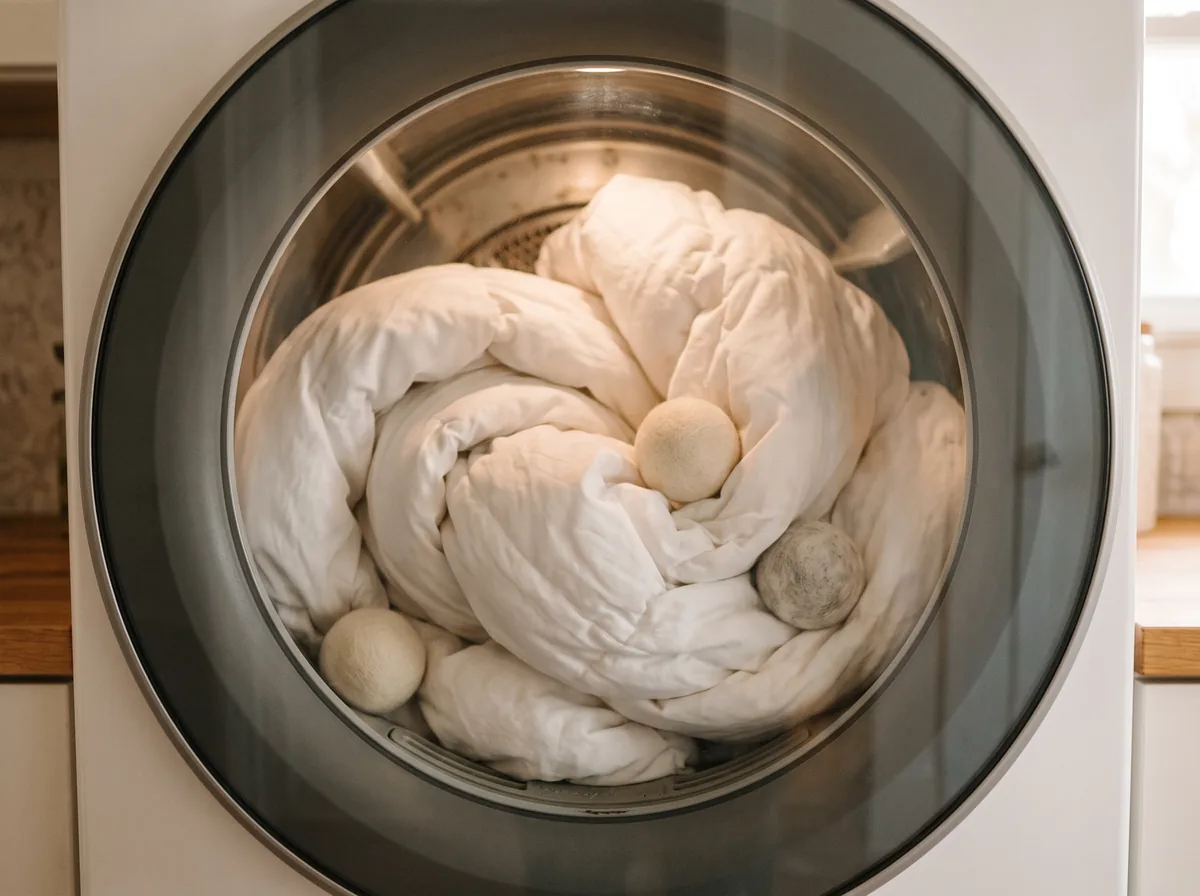
- Add two or three clean dryer balls or a couple of clean tennis balls in a sock. They knock the clumps apart and rebuild the loft.
- Pause and fluff. Every 30 to 45 minutes, take the comforter out, shake it, and break up any damp lumps by hand.
- Confirm it is bone dry. Feel every section, especially the corners and centre. If any spot is even slightly damp, keep drying.
Pro tip
Finish by draping the fully dried comforter over a couple of chairs or a drying rack for a few hours of air time. That final airing chases out the last trace of moisture and leaves it smelling fresh instead of like a warm dryer.
Home Wash, Dry Clean, or Professional Service
Washing at home is the cheapest route and, done right, perfectly safe for most machine-washable down. But it is not always the best call. Here is how the options compare.
| Option | Best for | Roughly costs | Watch out for |
|---|---|---|---|
| Wash at home | Machine-washable down, a big enough drum, and a free afternoon | Detergent only | Small washers, rushing the dry cycle |
| Laundromat | Oversized comforters or a small home washer | A few loonies per load | Booking enough dry time so it finishes fully |
| Dry clean | Dry clean only labels or delicate shells | $30 to $60+ per comforter | Solvent smell, cost adds up over the years |
| Cleaning service | Whole-home refreshes and bedding you would rather not handle | Varies by scope | Confirm they handle bulky down items |
Pricing note: The figures above are broad Ontario estimates for 2026 and vary by provider, comforter size, and region. Always confirm current pricing directly and check the care label before choosing a cleaning method.
How Often Should You Wash It?
Less often than you might think, as long as you protect it. A down comforter used with a duvet cover only needs a full wash once or twice a year. The duvet cover is your workhorse, and it should go through the laundry every one to two weeks with your sheets. That routine keeps sweat, skin, and dust off the down so the comforter itself stays cleaner far longer.
Save your money: A good duvet cover is the single cheapest way to make a down comforter last. It takes the daily wear, washes easily, and means you rarely have to run the comforter through a full cycle. Fewer washes means the down keeps its loft for years instead of flattening out early.
Download the free quick guide
A one-page checklist to wash and dry your down comforter without clumping or smell.
Frequently Asked Questions
For a full seasonal reset beyond bedding, Mrs. CleanMol's residential cleaning service covers the rest of the home on the same visit or a recurring schedule.