



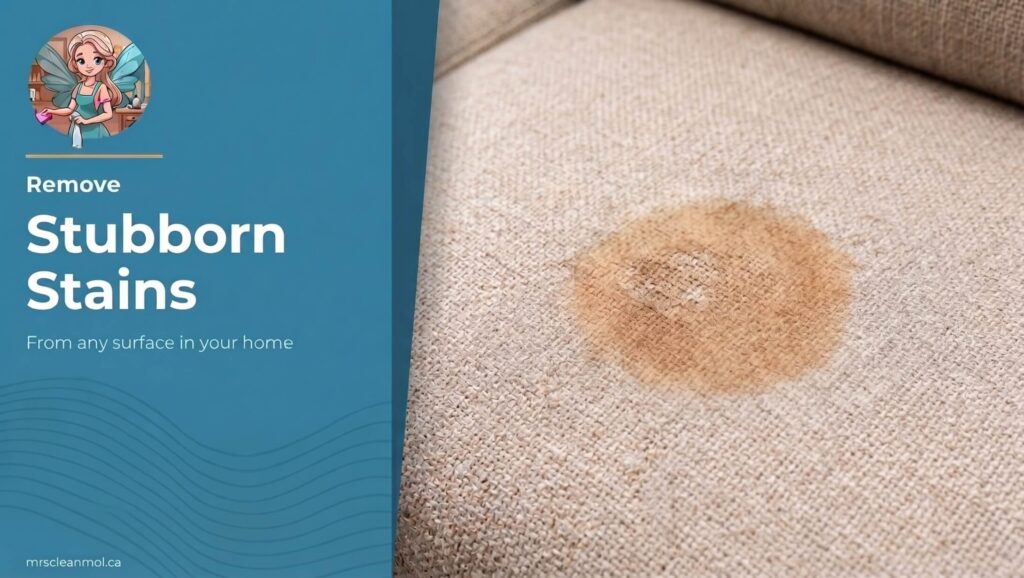
Knowing how to remove stubborn stains comes down to matching the treatment to the stain type and the surface. Most stain removal failures happen because people use the wrong product, apply too much of it, rub instead of blotting, or wait too long before treating. This guide covers the most common stubborn stains in GTA homes, from red wine on carpet to grease on tile grout, and gives you the exact method that works for each combination.
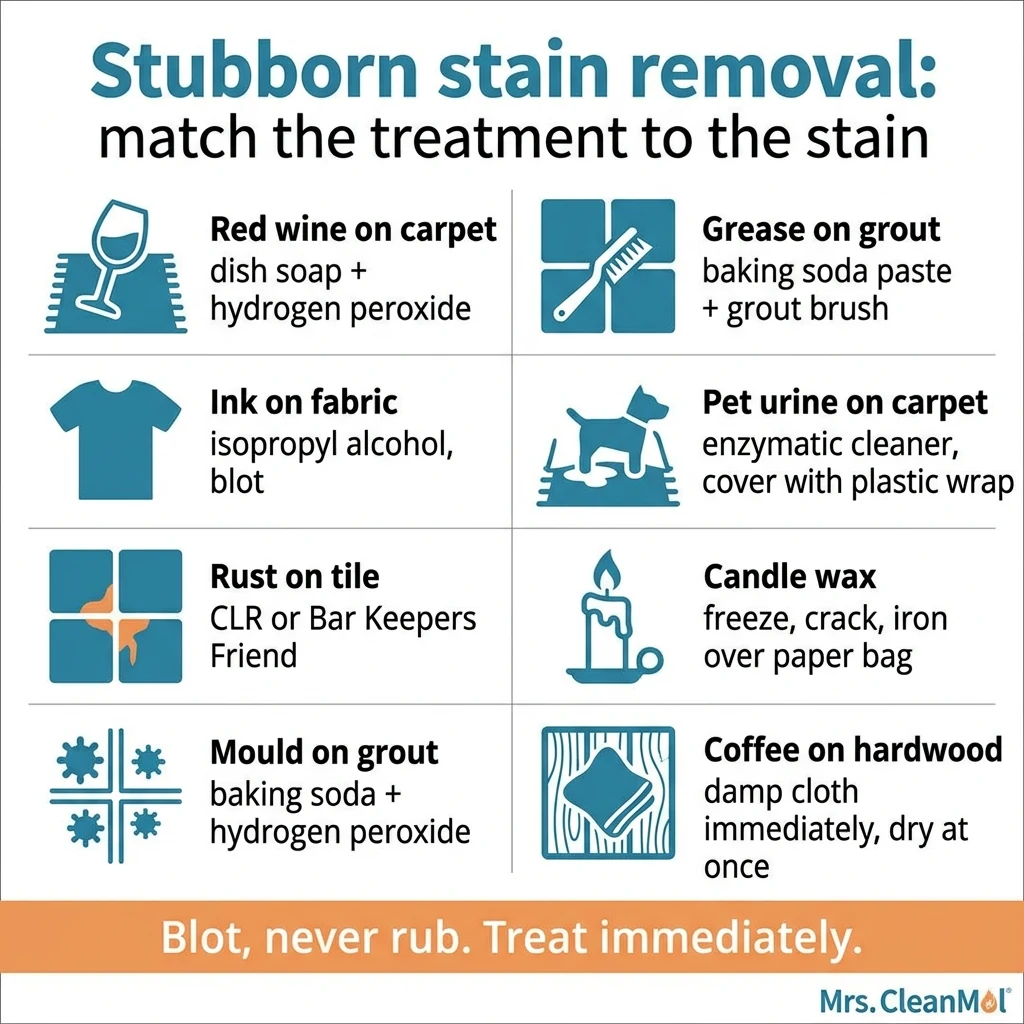
Some stains respond to products most homeowners already have on hand: dish soap, baking soda, hydrogen peroxide, white vinegar. Others require a specific enzymatic cleaner or commercial product. The table below maps stain types to surfaces and treatments to make this as practical as possible.
In this article
This article is also available as a podcast. Hit play to listen while you work or commute. This player is fully compatible with screen readers and assistive technology.
Rules That Apply to Every Stain
- Blot, do not rub. Rubbing spreads the stain and pushes it deeper into the fiber. Always blot from the outside edge toward the centre.
- Treat fresh stains immediately. Most stains are ten times easier to remove in the first 10 minutes than after they have set for hours.
- Test in a hidden area first. Any Health Canada’s consumer product safety guidelines for household cleaning products can affect colour or finish. Test on an inconspicuous spot before treating a visible area.
- Rinse thoroughly. Leaving cleaning product residue in fabric or carpet attracts more dirt and makes the stain reappear.
- Do not over-wet. Too much water in carpet or upholstery can lead to mould and backing damage.
PRO TIP
For most organic stains on carpet and upholstery (wine, coffee, food, pet accidents), the professional go-to is a 50/50 mix of dish soap and hydrogen peroxide applied, left for 5 minutes, and blotted out. This combination breaks down organic matter without bleaching most fabrics. Test on a hidden area first with any light-coloured fabric.
Stain removal by type and surface
| Stain type | Surface | Best treatment | Avoid |
|---|---|---|---|
| Red wine | Carpet | Blot, apply dish soap + hydrogen peroxide, let sit, blot dry | Rubbing; hot water |
| Grease | Tile grout | Baking soda paste + grout brush; citrus degreaser | Bleach (discolours grout over time) |
| Ink | Fabric/upholstery | Isopropyl alcohol on a cloth; blot, do not rub | Water (spreads ink) |
| Coffee | Hardwood | Damp microfibre cloth immediately; dry at once | Excess water on hardwood |
| Pet urine | Carpet | Enzymatic cleaner (Nature’s Miracle), cover with plastic wrap, let dwell | Steam cleaning (sets proteins) |
| Rust | Tile / grout | CLR or Bar Keepers Friend; apply, dwell, scrub | Bleach (does not remove rust) |
| Candle wax | Carpet / fabric | Freeze with ice, crack and pick off wax; iron over paper bag to absorb residue | Rubbing while warm |
| Mould | Grout / caulk | Baking soda + hydrogen peroxide paste; scrub; bleach solution for persistent mould | Leaving it untreated |
Dealing With Set Stains
Stains that have been there for days or weeks are harder to remove but not always impossible. The approach is to re-wet the stain to bring it back to an active state before treating. For carpet, apply a small amount of cold water to the stain first, let it sit briefly, then apply your treatment. For fabric, soaking in an enzyme presoak product for 30 to 60 minutes before washing often works on set organic stains.
DID YOU KNOW
Bar Keepers Friend (available at most Canadian Tire locations in the GTA) is one of the most versatile stain removers for hard surfaces. It removes rust, mineral deposits, tarnish, and burnt-on food from stainless steel, ceramic, tile, and porcelain. It is a staple in commercial cleaning operations across Ontario.
What Not To Do
Bleach is not a universal stain remover. It disinfects and whitens, but it does not remove most stains and can permanently bleach coloured fabrics, discolour grout over time, and damage tile sealant. Avoid using bleach on any stain unless the surface is white and non-porous and you understand the risks.
Vinegar is also not as useful as it is often presented online. It is mildly acidic and can damage stone, grout sealant, and hardwood finish. It is reasonable for some odour control but is not an effective stain remover for most situations.
PEOPLE OFTEN ASK
Can I remove a stain that has been there for years? Sometimes, but it depends on what it is and what surface it is on. Very old protein stains (blood, urine) on carpet that have been heat-set (vacuumed with a heated vacuum, steam cleaned) are often permanent. Mineral deposits, rust, and some dye transfers can often be removed even after years with the right product.
If you are preparing a home for a deep clean or move-out, see our guide on how to prepare your house for a deep cleaning. Our residential cleaning services team handles stubborn stains and problem areas as part of our full-service offering across Orillia, Barrie, and the GTA.
Download the free quick guide
Save this as a PDF and keep it handy.
FAQs
Does hydrogen peroxide bleach carpet?
Hydrogen peroxide at 3% concentration (the standard drugstore variety) does not bleach most carpets when used diluted and blotted out quickly. Higher concentrations can cause lightening on dark fabrics. Always test in a hidden area first. On white or light-coloured carpet, 3% hydrogen peroxide is generally safe and effective.
How do I remove a blood stain from fabric?
Cold water only, never hot. Hot water sets protein stains permanently. Soak the fabric in cold water, then apply a paste of meat tenderizer (contains natural enzymes) or an enzymatic cleaner and let it sit for 30 minutes. Rinse with cold water. For dried blood stains, soak in an enzyme presoak for 60 minutes before washing.
How do I remove yellow stains from white fabric (like collars or pillowcases)?
Yellow staining on white fabric is usually from sweat and body oil. An oxygen bleach (OxiClean) soak for two to four hours before washing lifts these stains well. A paste of baking soda and dish soap applied and left for 30 minutes before washing also works on lighter discolouration.
What removes marker or crayon from walls?
Magic Eraser (melamine foam) works well on painted walls for crayon and most marker. For permanent marker, a small amount of rubbing alcohol on a cloth often removes it from walls without damaging matte paint. Test in a hidden corner first as alcohol can remove paint sheen from some finishes.
How do I remove water rings from wood furniture?
Fresh water rings often buff out with a dry cloth. For white water rings that have dried, a small amount of petroleum jelly or non-gel toothpaste rubbed in gently, left for a few hours, then wiped off often removes them. Dark water rings that go through the finish into the wood require sanding and refinishing.
For stains that do not lift with these methods, or surfaces you would rather not risk, Mrs. CleanMol’s residential cleaning team handles deep stain removal as part of a standard deep clean.