



1. Start with Prevention: The Proactive Pet Owner’s Routine
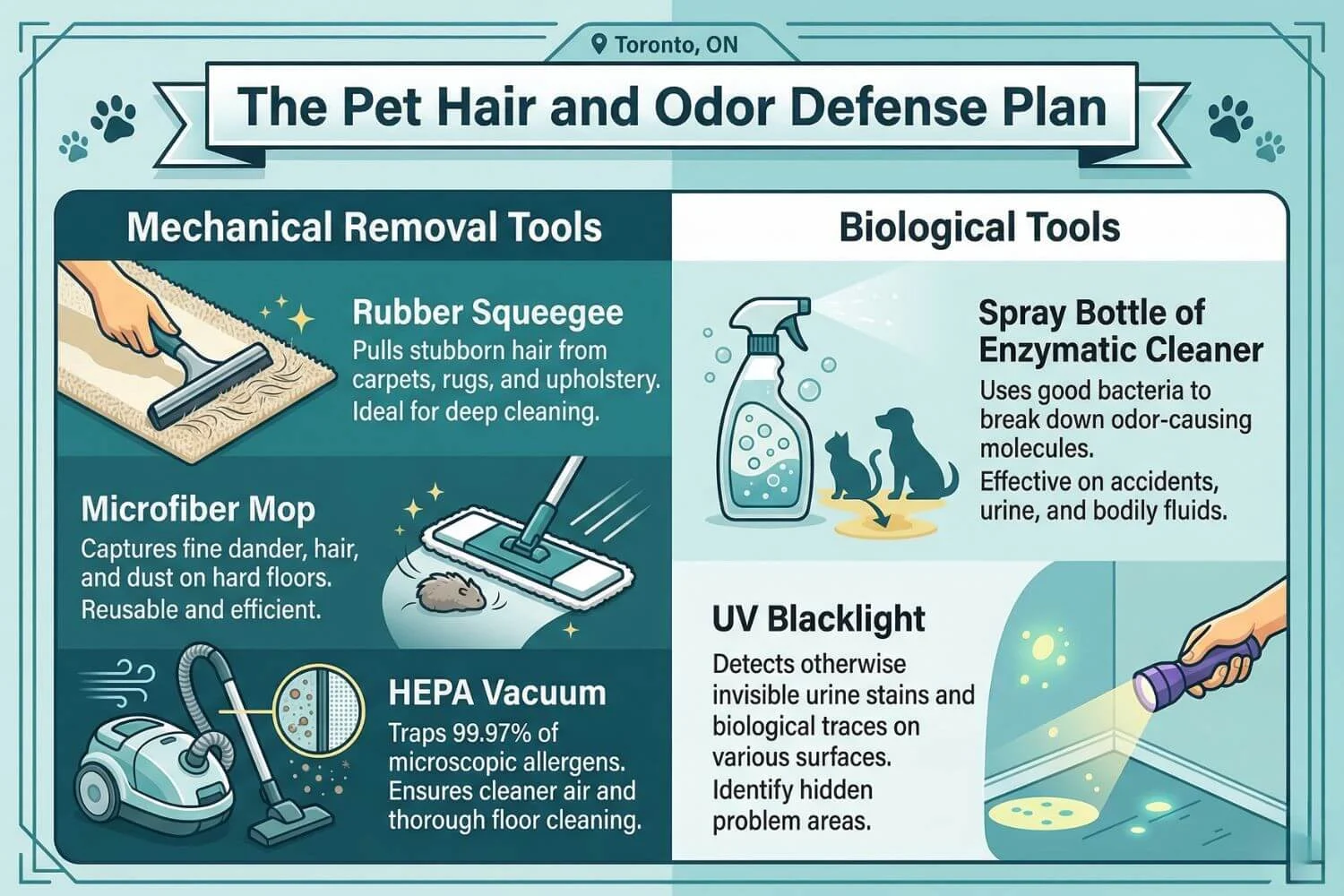
Before diving into deep cleaning, the best way to manage a home with pets is to stop the mess before it settles into your fibres. Taking a cue from the most successful pet-friendly households, consistency is key:- The Grooming Station: Brushing your pets outdoors twice a week significantly reduces the amount of fur that ends up on your rugs and baseboards.
- The “Paw Station”: Keep a microfiber cloth and a shallow tray of water by the door. Wiping paws after a walk prevents outdoor allergens and mud from being tracked onto your carpets.
- Washable Barriers: Use stylish throws on sofas and chairs. It is much easier to toss a furniture cover into the wash than it is to steam clean upholstery.
- Weekly Bedding Cycles: Wash all pet bedding in hot water every seven days to kill odour-causing bacteria before they migrate to your flooring.
2. Why Traditional Cleaners Often Fail on Pet Urine
Most standard household cleaners only mask foul smells temporarily. They rely on strong perfumes and basic surfactants to cover up the problem, leaving the root cause completely untouched. Pet urine contains uric acid crystals that bind tightly to carpet fibres and wooden subfloors. Cat urine is especially problematic due to its highly acidic pH when fresh. To effectively eliminate stubborn odours, you need a biological solution. Enzymatic cleaners contain specific beneficial bacteria that literally digest the organic waste.| Cleaner Type | Mechanism of Action | Effectiveness on Pet Urine |
|---|---|---|
| Standard Soap | Lifts surface dirt and adds fragrance | Low (Masks odour temporarily) |
| Vinegar and Baking Soda | Neutralizes pH levels slightly | Medium (Good for fresh spots only) |
| Enzymatic Cleaners | Digests uric acid proteins and bacteria | High (Destroys the source completely) |
3. The “Search and Destroy” Method for Hidden Stains
You cannot effectively clean what you cannot see. Odours often linger because homeowners miss the exact location of the urine accident. This is especially true for older stains that have dried completely clear. To locate these invisible spots, you must use a 365nm UV blacklight. Turn off all the lights in the room and close the blinds. Scan the floor slowly; urine crystals will glow a bright neon yellow or green. Mark them with a small piece of painter’s tape so you can treat them properly with your enzymatic spray.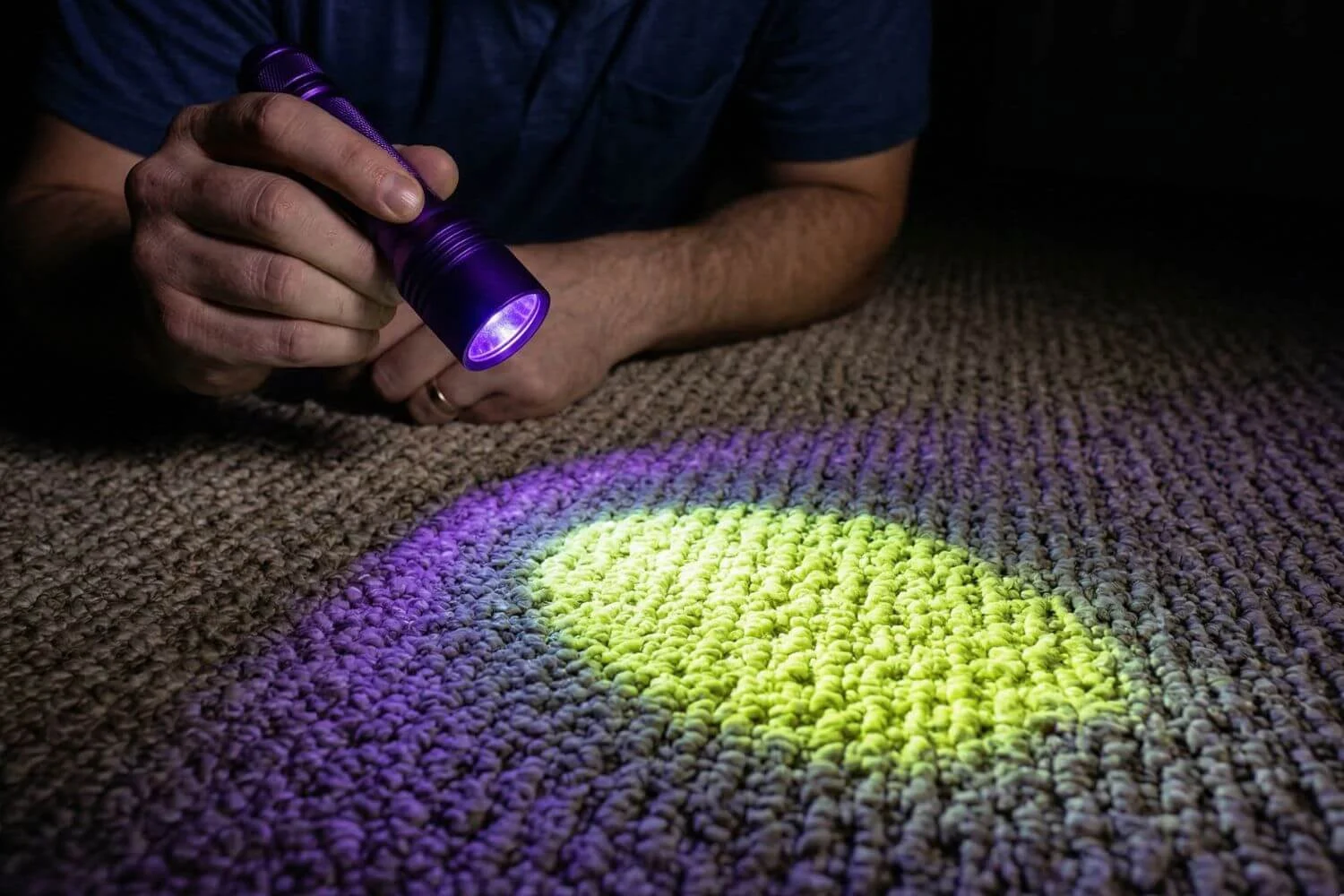
4. Breaking the Static: Tools for Removing Embedded Fur
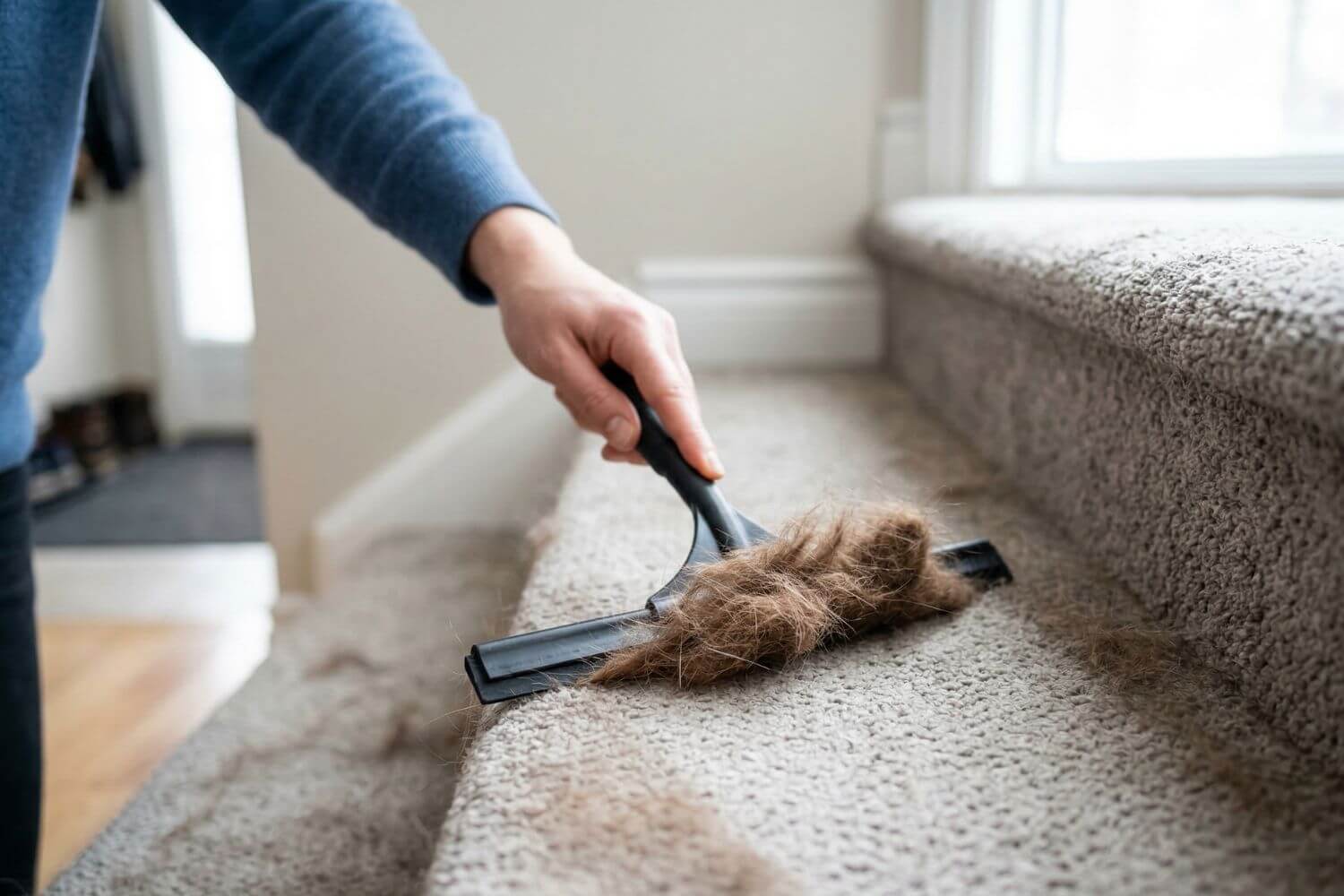
Vacuuming alone rarely removes all the fur trapped in woven upholstery fabrics. The fabric fibres act like tiny hooks that grab onto pet hair tightly. You need to break the static bond to lift the hair effectively using mechanical friction.- Rubber Window Squeegee: Drag a squeegee across couches and fabric chairs to pull fur into large clumps instantly.
- Damp Rubber Gloves: Put on dish gloves and use short strokes to lift embedded hair from carpeted stairs.
- Microfiber Dry Mop: Use this on hardwood floors to attract loose hair without blowing it around like a standard broom.
- HEPA Vacuum Attachments: Use a motorized brush roll tool to extract the loosened clumps from deep within the fibres.
5. Improving Indoor Air Quality and Managing Dander
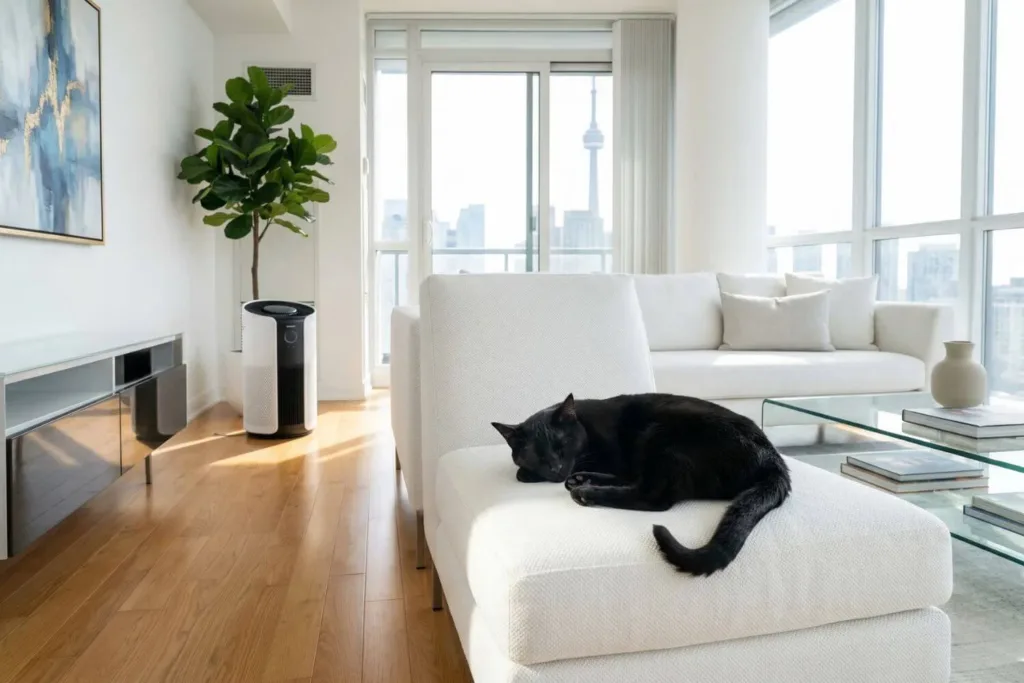
Airborne dander is a primary culprit behind lingering house smells and allergy symptoms. Dander consists of microscopic flecks of skin shed by cats, dogs, rodents, and birds. You can learn more about the biological composition of these particles by reading the Wikipedia overview on animal dander. These tiny particles circulate through your HVAC system and settle on every surface. Failing to manage pet dander can directly increase the population of carpet dust mites in your home. To capture these allergens, you must use an air purifier equipped with a true H13 HEPA filter.6. When Should You Hire Professional Cleaners?
Sometimes the accumulation of dander and accidents requires heavy-duty intervention. If you have just moved into a home previously occupied by multiple animals, standard consumer products might fail. Professional cleaners use industrial-grade hot water extraction and hospital-grade sanitizers. For residents in Simcoe County dealing with persistent pet messes, booking a trusted house cleaning service in Barrie ensures a deeply sanitized home. Professional deep cleaning tackles the microscopic bacteria that household vacuums leave behind.What is the Best Pet Cleaning Routine for a Fresh Home?
- Wash all pet bedding in hot water every seven days.
- Brush your pets outdoors to significantly reduce indoor shedding.
- Wipe paws with a damp microfiber cloth immediately after walks.
- Empty and sanitize plastic litter boxes once a month to prevent ammonia buildup.
- Run a HEPA vacuum over high-traffic rugs twice a week.
For pet owners who want the deeper reset (upholstery, baseboards, and corners a weekly routine misses), Mrs. CleanMol offers professional residential cleaning across Barrie and Simcoe County, including HEPA-filtration vacuuming built into every visit.