



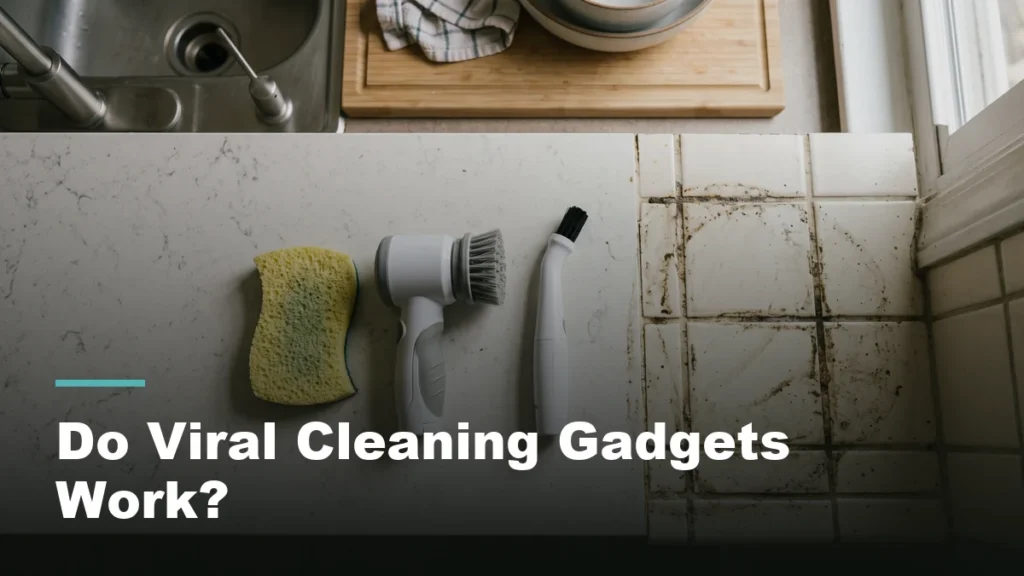
Every few months a new gadget takes over your feed, spinning, glowing, or foaming its way through a dirty grout line in fifteen seconds flat, and you are left wondering whether it belongs on your counter or in a landfill by next spring. So, do viral cleaning gadgets work, or are they mostly a satisfying video with a mediocre product attached? The honest answer is that it depends entirely on the gadget and the surface, and before you buy another one, it is worth asking whether a professional house cleaning visit already solves the actual problem you are trying to fix with a gadget.
This is a mechanism by mechanism look at whether viral cleaning gadgets actually work, where they genuinely earn the hype, and where the video looked better than the real result ever will.
What makes a cleaning gadget go viral in the first place?
Almost every viral cleaning video follows the same shape: a surface that looks genuinely disgusting, a tool applied in one smooth motion, and a payoff shot of the same spot looking new. That structure is designed for video, not for your actual bathroom. Real grout, real grease, and a real spice rack rarely cooperate in fifteen seconds, and a video edited down from twenty minutes of work looks nothing like the unedited version you would get at home.
None of that makes the gadgets fake. It means the honest question is not whether the video is real, but whether the mechanism behind the gadget can do what it is being shown doing, on the surfaces you actually have.
Quick Take
Most viral cleaning gadgets work at something real. They are usually a genuine mechanism, aimed at a narrow set of surfaces, marketed as if it works on everything. The gap between hype and reality is almost always about scope, not honesty.
The real question: do viral cleaning gadgets work, or just look good on camera?
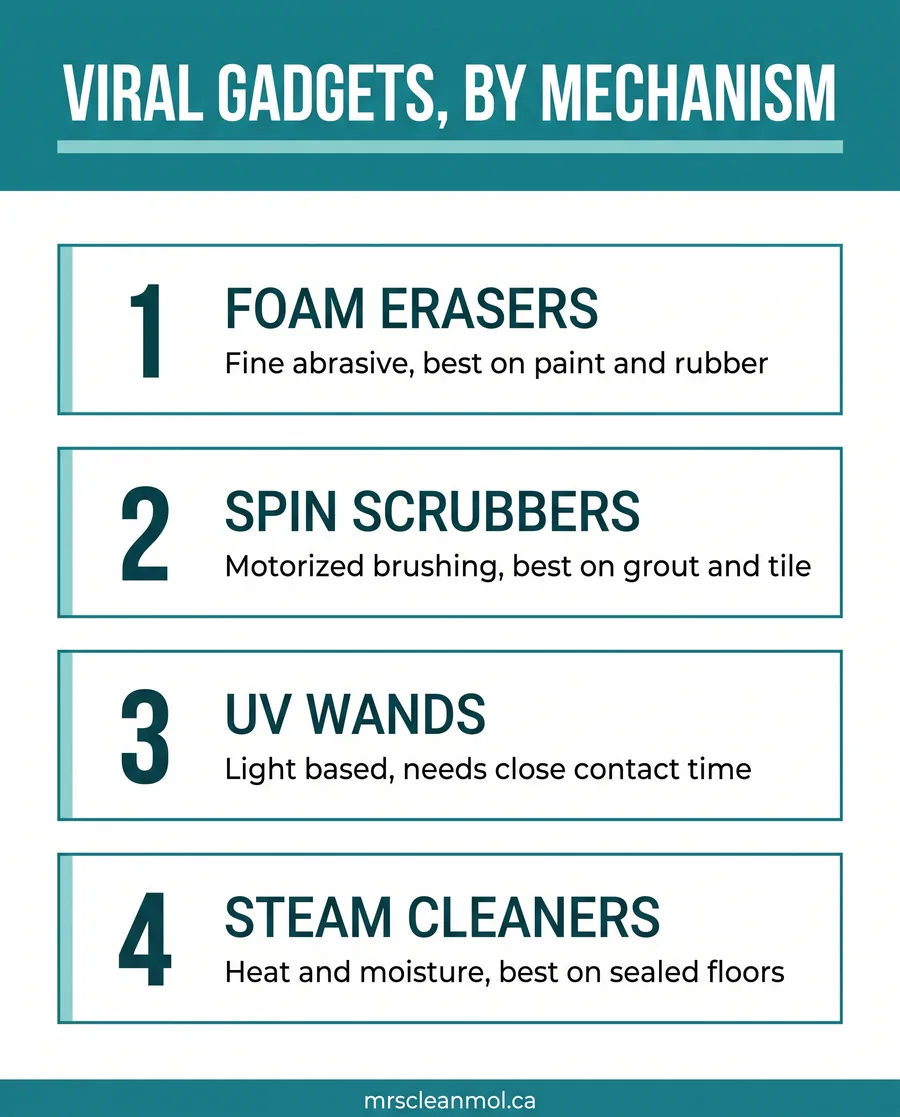
Every gadget in this category runs on one of a small handful of actual mechanisms: abrasion, motorized agitation, heat and moisture, or light. Once you know which one a specific gadget uses, you can predict roughly what it will and will not do, without needing to buy it first to find out.
That is the lens for everything below. Not ‘does this brand work’, but ‘does this mechanism make sense for what I am trying to clean’.
Four viral categories, judged on mechanism, not hype
Melamine foam erasers
These are an open-cell foam that works like an extremely fine abrasive, physically sanding away a thin layer of residue rather than dissolving it chemically. That is why they are genuinely impressive on scuffed painted walls, crayon marks, and grimy rubber shoe soles. It is also exactly why they can dull a glossy painted finish, strip wax or polish off a surface, and scratch matte or coated materials that a soft cloth would leave alone. Test on a hidden spot before using one on anything with a finish you care about. It belongs on the same list as the everyday cleaning habits that damage surfaces without anyone noticing until the damage is already done.
Electric spin scrubbers
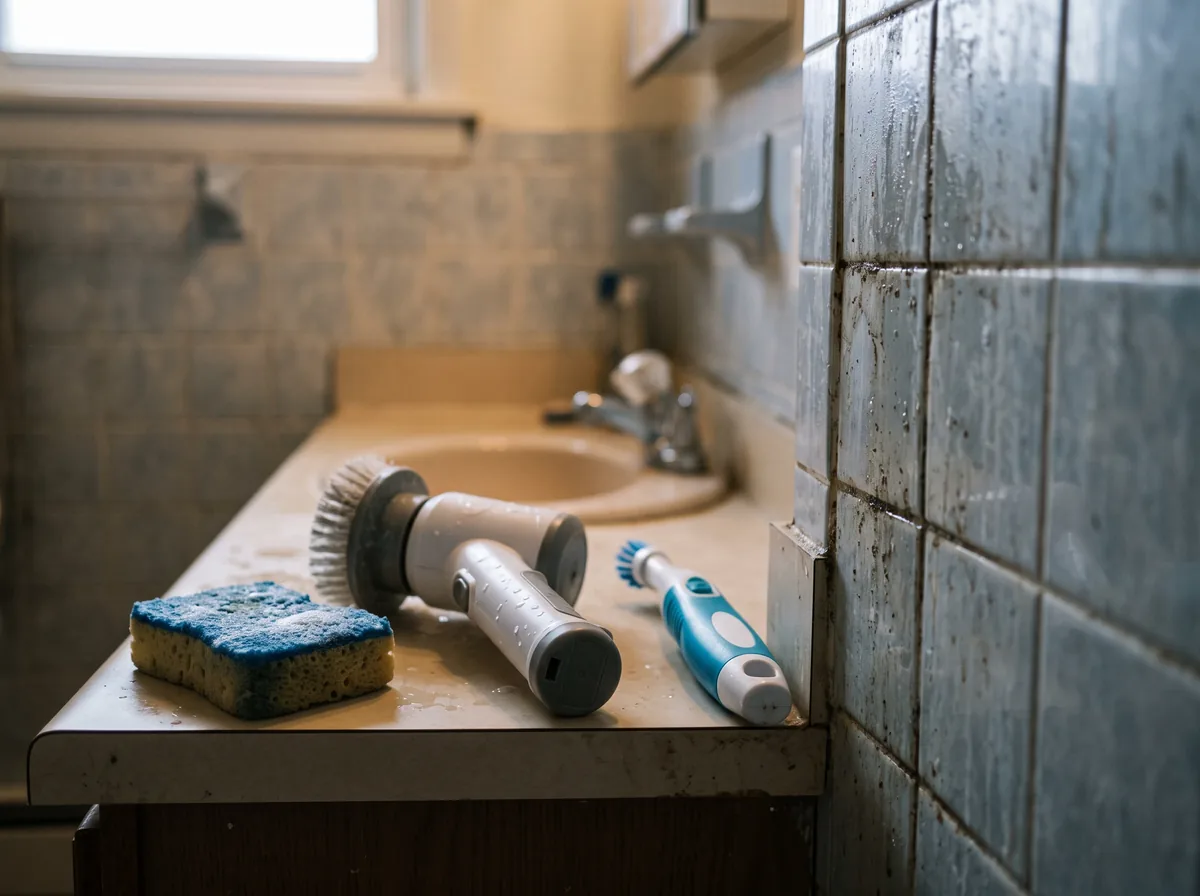
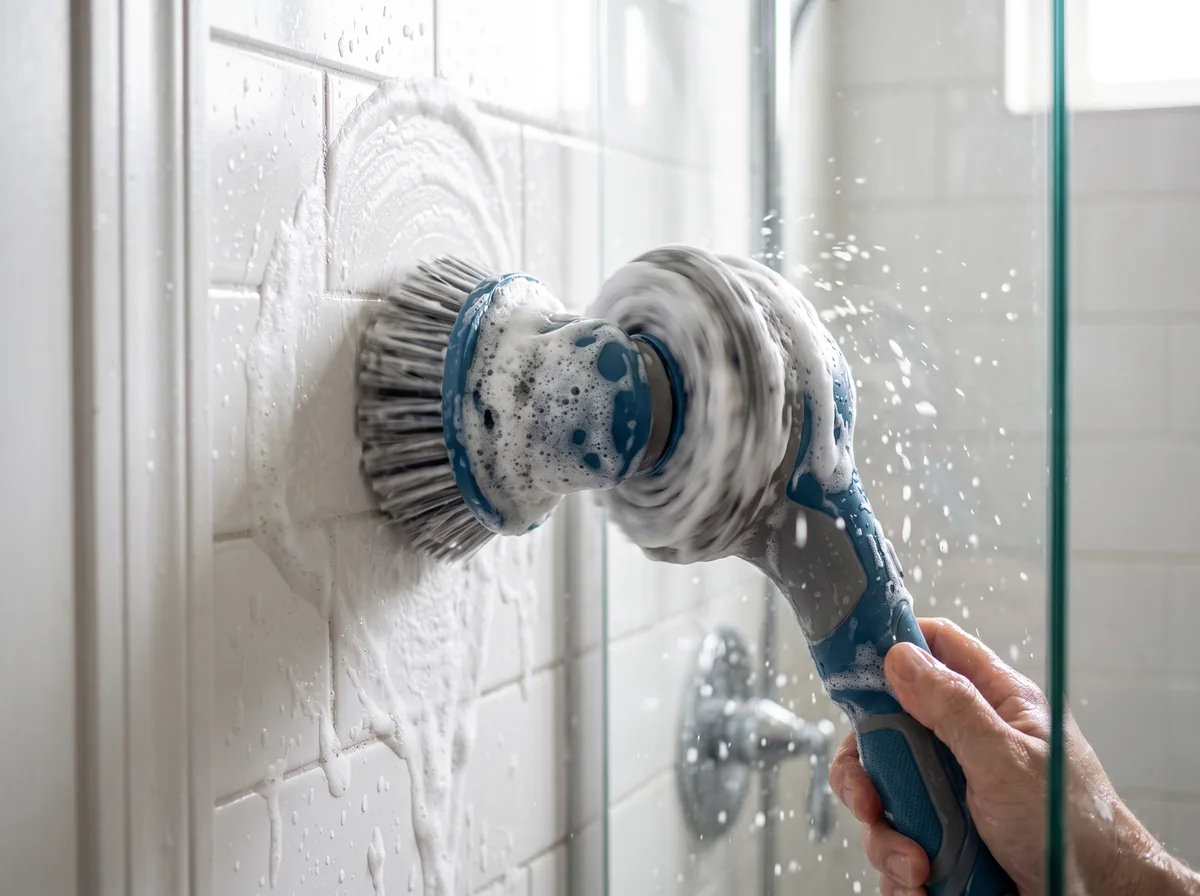
A motorized handle spins a brush head far faster and more evenly than a hand can manage, which is a real advantage in grout lines, tile corners, and tub surrounds where scrubbing by hand is genuinely tiring. The brush head matters more than the motor: a stiff head that is fine on sealed tile can be too aggressive on softer stone like marble or on a delicate painted finish, so matching the head to the surface is most of the job.
UV-C sanitizing wands
The underlying science, UV-C light disrupting microorganisms, is real and used in commercial and medical settings. Where consumer wands run into trouble is dose: getting a meaningful effect requires holding the light close to a surface, at the right angle, for long enough, with a direct line of sight and no shadow. A quick sweep over a countertop rarely meets those conditions, which is a gap between the underlying science and what a five-second wave actually achieves in practice.
People Often Ask
Are UV wands actually dangerous? Direct UV-C exposure to skin or eyes is a real risk with these devices, not a myth, so keep them pointed away from yourself and anyone nearby, and treat any device without a shutoff sensor with caution.
Steam cleaners and steam mops
Heat and moisture loosen grease and grime without needing a chemical cleaner, which is the whole appeal, and on sealed tile and most hard flooring that works well. The risk sits with unsealed wood, laminate, and some engineered flooring, where repeated moisture and heat exposure can warp boards or cloud a finish over time. Steam also does not replace a proper food-contact sanitizing step in a kitchen; it loosens grime, which is a cleaning job, not a certified sanitizing one.
Side by side: what each gadget can and cannot do
| Gadget type | What it can do well | Where to be careful |
|---|---|---|
| Melamine foam erasers | Scuffs on painted walls, crayon marks, grimy rubber | Can dull gloss finishes and strip wax or polish |
| Electric spin scrubbers | Grout lines, tile corners, tub surrounds | Match the brush head; stiff heads can mark soft stone |
| UV-C sanitizing wands | A real mechanism used commercially with proper dose | Consumer use rarely gets close contact time or angle |
| Steam cleaners and mops | Sealed tile and hard flooring, chemical-free grime lift | Risk to unsealed wood and laminate over repeated use |
The one viral ‘hack’ worth skipping entirely
Not every viral trend is a gadget. Some are DIY concoctions that combine cleaning products together for a bigger visual effect, and this is the one category worth avoiding outright rather than just using carefully. Mixing bleach with ammonia-based cleaners, or bleach with vinegar, can create toxic gas, and that risk does not scale down just because the batch is small or the video makes it look casual. the Canadian Centre for Occupational Health and Safety’s guidance on working safely with cleaning products is explicit that cleaning products should never be combined unless a label specifically says it is designed to be used that way.
Good to know
Ventilate the room, read labels before combining anything, and never mix cleaning products based on a video rather than the manufacturer’s own instructions. If you are ever unsure whether two products are safe together, treat that as a reason to keep them separate.
When a gadget is worth buying, and when the classic method wins
A gadget earns its spot on the counter when the mechanism actually matches a problem you have regularly, not a one-time deep clean you saw in a video. An electric spin scrubber makes sense if your bathroom has grout lines you are fighting every week. A single melamine sponge for scuff marks is a cheap, low-risk purchase most households eventually reach for anyway.
For a genuine deep clean covering a whole home rather than one trouble spot, comparing the actual cost against a quick estimate for a professional cleaning visit is often more useful than another gadget purchase, especially once you count the ones already sitting unused in a cupboard.
Download the free quick guide
A printable one-page reference sorting popular gadget categories by mechanism, best use, and where to be careful.
Frequently asked questions
Are melamine foam erasers safe on stainless steel appliances?
Generally, no, or at least not without real caution. The mild abrasive action that makes these effective on painted walls can leave fine scratches on a brushed or polished stainless finish, which show up more under kitchen lighting than they do in a quick glance. A soft cloth with a stainless-safe cleaner is the lower-risk choice for appliances, and it is worth reserving the foam eraser for painted surfaces, tile grout lines, and rubber or vinyl, where the abrasive action does not have a finish to damage.
Do robot mops and vacuums count as viral cleaning gadgets, and do they actually work?
They usually get lumped in, though the way viral cleaning gadgets work in this category is on a completely different mechanism than a handheld spin scrubber or a foam eraser. They are closer to a scheduled maintenance tool, covering floors regularly rather than tackling a single dramatic trouble spot. They handle everyday dust and light debris well, but they are not a substitute for the kind of deep clean a grout line, a baseboard, or a bathroom actually needs on a regular basis.
Is it worth buying a gadget just because it went viral?
Popularity alone says very little about whether a mechanism fits your specific problem, so it is worth pausing on that question before buying. A device built around abrasion, motorized brushing, heat, or light is either useful for your actual surfaces or it is not, and that answer does not change based on how many views a video got. If you can name the specific recurring problem a gadget would solve in your own home, it is usually a better purchase than one bought on momentum alone.
Can steam cleaners be used to sanitize kitchen surfaces?
Steam loosens grime and grease effectively, which is a genuine cleaning benefit, but it is not the same as a certified food-contact sanitizing step, and the two should not be treated as interchangeable. For food-contact surfaces, follow a proper cleaning-then-sanitizing routine rather than relying on steam alone to do both jobs, particularly after handling raw meat, poultry, or seafood.
The verdict on whether viral cleaning gadgets work is not really yes or no. It is that most of them do exactly one job well, on a specific surface, and the video never mentions the surface part. Match the mechanism to your actual problem and skip anything that asks you to mix products together, and most of these gadgets earn a fair shot.
If the bigger picture is a home that needs more than a gadget can fix, request a free cleaning quote and we will handle the parts no viral tool ever quite gets to.