



Table of Contents
Introduction
Why Germs Spread During Cleaning
How We Reduce Cross-Contamination as Professional Cleaners
What Cross-Contamination Looks Like in Everyday Home Cleaning
Tools and Products That Help Prevent Cross-Contamination
The Most Common Cleaning Mistakes That Causes Cross-Contamination
A Simple Cleaning System That Stops Germs From Spreading
Areas in the Home That Need Extra Care to Prevent Cross-Contamination
Cross-contamination sounds technical, but it’s really just germs spreading from one place to another while you’re cleaning. We see this all the time in homes across the GTA, even ones that look spotless. A dirty cloth, reused mop water, or unwashed hands can undo a lot of effort fast. Here’s how you can adapt smarter habits to avoid cross-contamination in your home.
Why Germs Spread During Cleaning
Cross-contamination happens when tools, hands, or cleaning water carry bacteria from dirtier areas into cleaner ones. Most people don’t notice it because everything still looks clean. The reasons germs spread are:
- Using the same cloth in multiple rooms
- Reusing sponges that never fully dry
- Cleaning floors with already-dirty water
- Touching clean surfaces after handling messes
Once you understand how easily germs move, cleaning without cross-contamination becomes much easier to control.
How We Reduce Cross-Contamination as Professional Cleaners
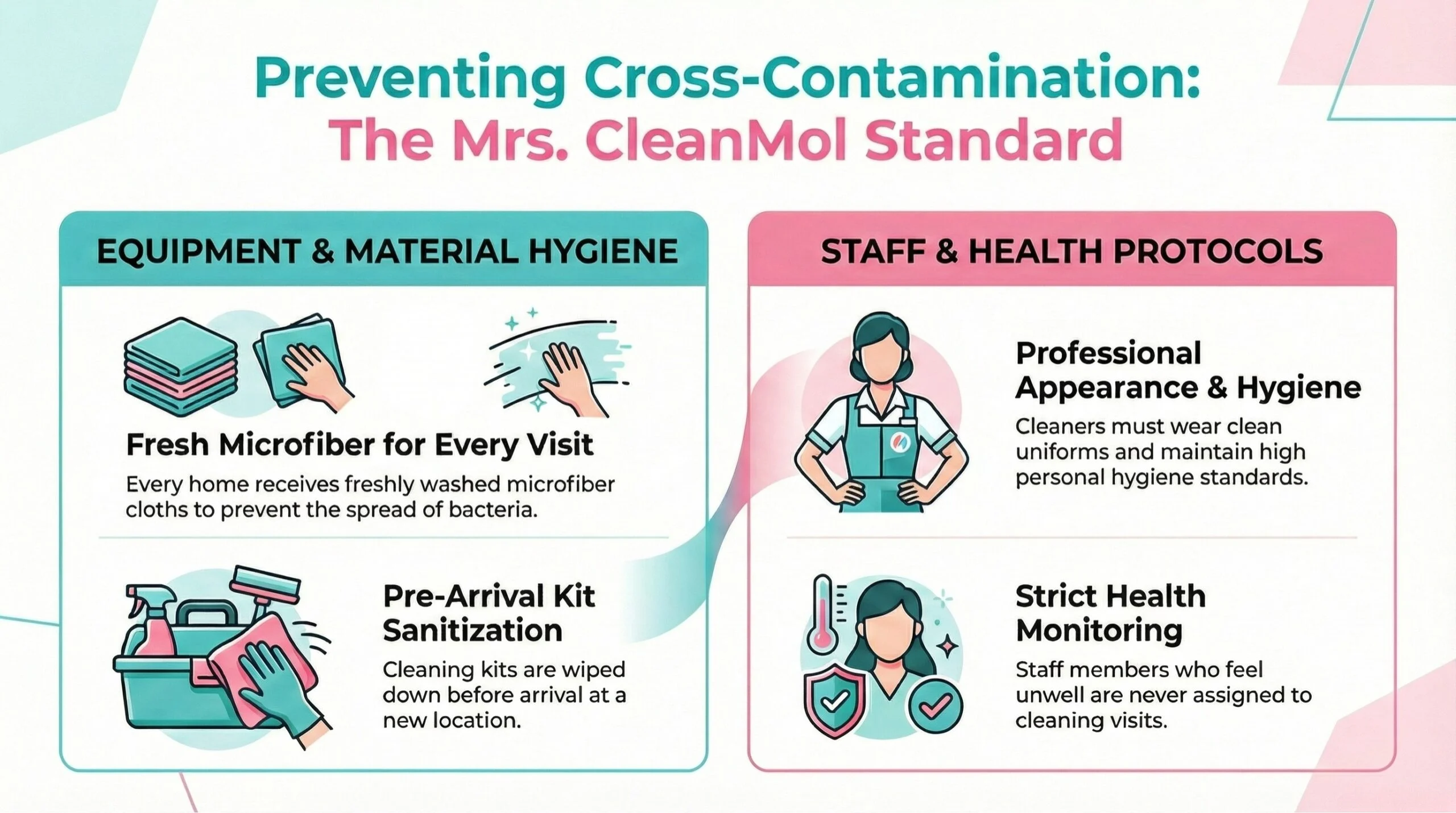
Preventing cross-contamination is built into everything we do at Mrs.CleanMol as experienced home cleaners. Our approach includes:
- Clean uniforms and good hygiene
- Freshly washed microfiber for every visit
- Wiping down cleaning kits before arrival
- Not assigning cleaners who feel unwell
Our system limits how many germs enter the home in the first place.
What Cross-Contamination Looks Like in Everyday Home Cleaning
Cross-contamination isn’t dramatic or obvious. You might recognize cross-contamination as:
- Wiping the bathroom sink, then the kitchen counter
- Vacuuming carpets but never emptying the vacuum
- Cleaning light switches after floors
- Mopping every room with the same pad
These routines spread bacteria quietly. Fixing them doesn’t mean cleaning more, just cleaning mindfully.
Tools and Products That Help Prevent Cross-Contamination
You don’t need dozens of products just the right ones:
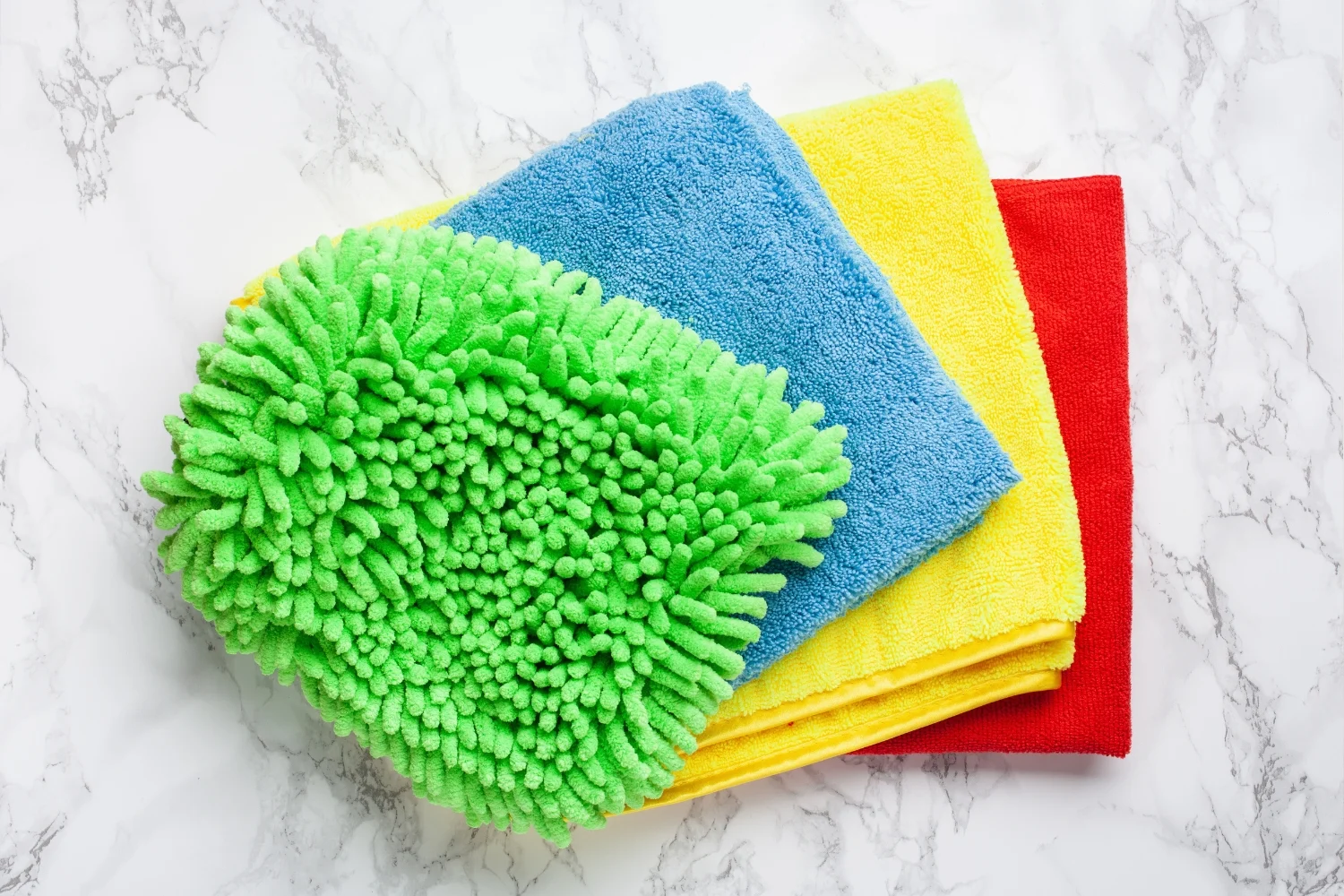
- Microfiber cloths that trap dirt instead of pushing it around
- Disposable or washable gloves
- Vacuums with HEPA filtration
- Steam mops that clean without dirty water
The Most Common Cleaning Mistakes That Cause Cross-Contamination
Most cross-contamination comes down to a few repeat mistakes. Watch out for these:
- Holding onto sponges too long: sponges stay damp, trap bacteria, and then spread those germs to every surface you wipe instead of removing them
- Not washing microfiber cloths properly: trapped germs stay in the fibres and get spread back onto “clean” surfaces the next time you use them
- Skipping hand washing between rooms: your hands carry bacteria from dirtier areas straight into cleaner spaces.
- Using one mop pad everywhere: germs picked up in bathrooms or entryways get dragged across the rest of the floors
Old sponges, string mops, and reused buckets usually make the problem worse.
A Simple Cleaning System That Stops Germs From Spreading
A clear system helps to avoid any cross-contamination. Here’s a simple order that works: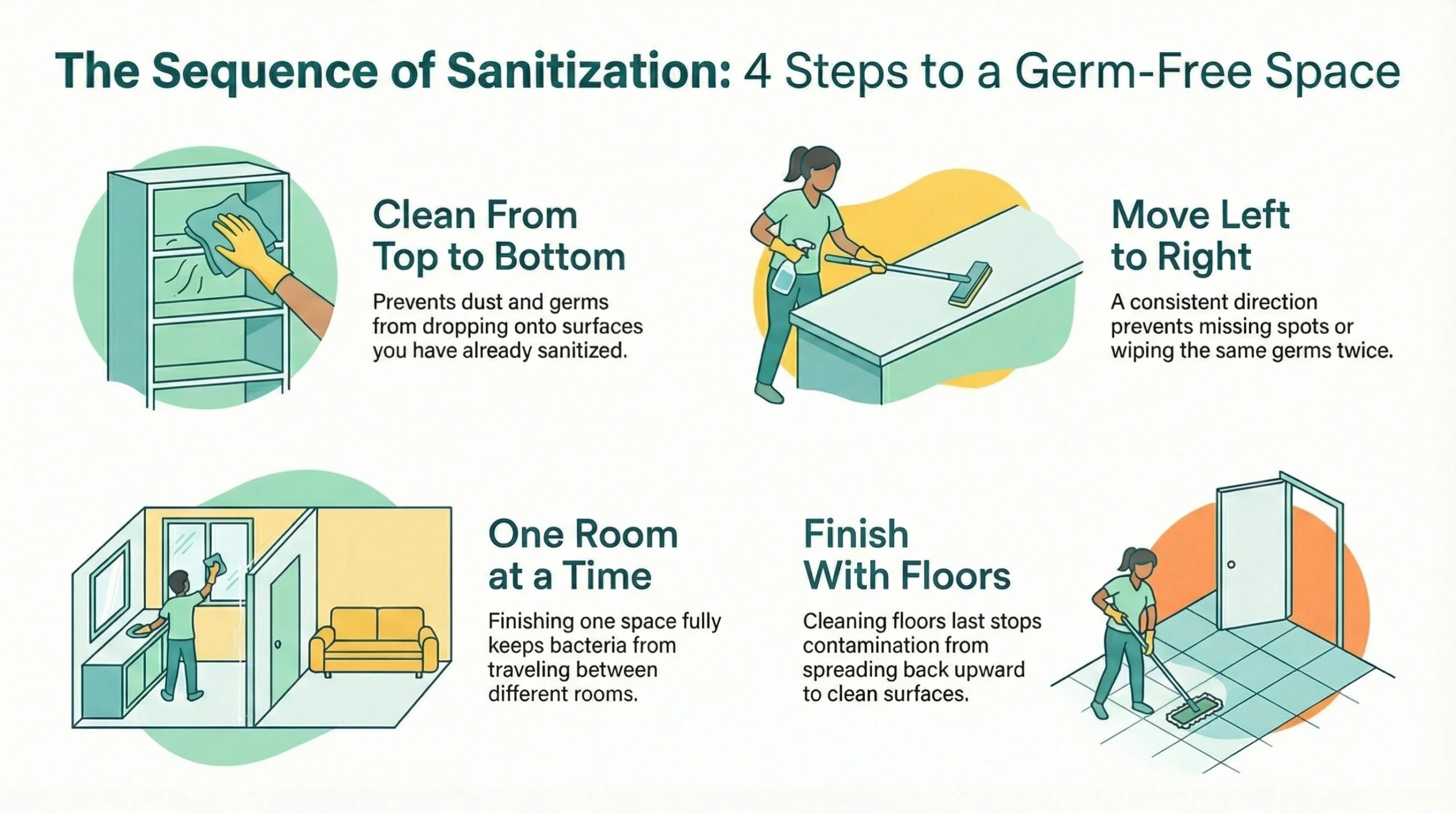
- Clean top surfaces first: This prevents dust and germs from dropping onto areas you’ve already cleaned.
- Move left to right: A consistent direction helps you avoid missing spots or wiping the same germs twice.
- Work one room at a time: Finishing one space fully keeps bacteria from travelling between rooms.
- Finish with floors: Floors collect everything, so cleaning them last stops contamination from spreading back upward.
Read our blog on the correct order to clean your home so you can efficiently get tidied up!
Areas in the Home That Need Extra Care to Prevent Cross-Contamination
Some parts of the home collect germs faster and need special attention. The sections below focus on the biggest problem areas.
High-Touch Surfaces That Spread Germs
These spots are touched constantly and often forgotten. These include:
- Door handles and light switches
- Faucets and sink handles
- Remote controls and keyboards
- Window locks and cabinet pulls
Use a fresh cloth when wiping these so germs don’t move around.
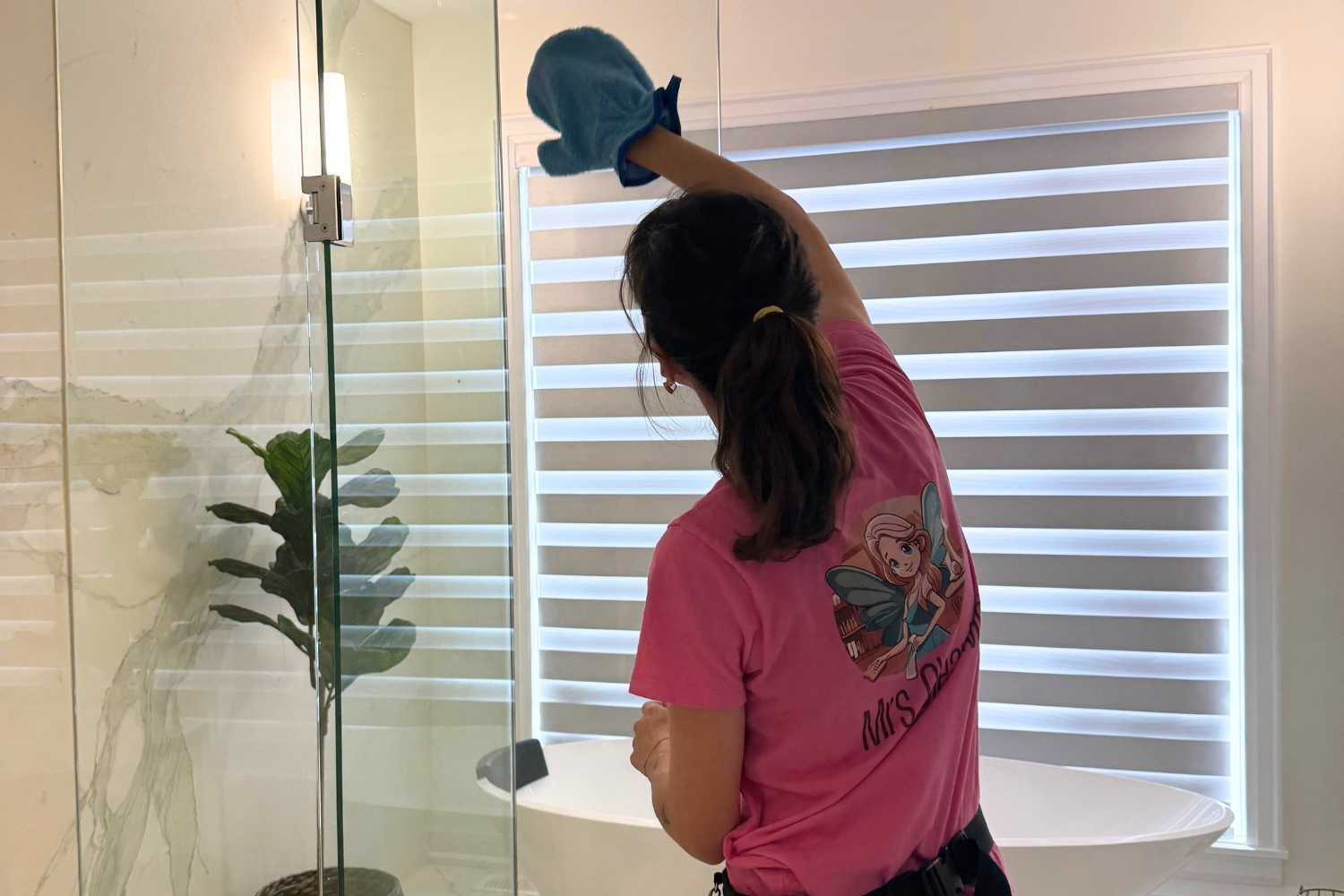
Floors and Entryways Where Outside Germs Enter the Home
Entryways bring in everything from outside. Make sure you:
- Take shoes off at the door
- Vacuum mats and carpets often
- Wipe baseboards regularly
- Empty the vacuum debris after each use
Avoid mop buckets filled with dirty water. Steam or clean pads work better for cleaning without cross-contamination.
Kitchen and Food Areas That Can Affect Your Health
The kitchen needs extra care because germs can lead to illness, like food poisoning. Foods most vulnerable to contamination are:
- Raw meat, poultry, and seafood
- Unwashed fruits and vegetables
- Raw eggs and unpasteurized dairy
- Deli meats and leftovers
Always clean prep areas with fresh cloths (don’t reuse them unless they’re thoroughly disinfected) and wash hands often.
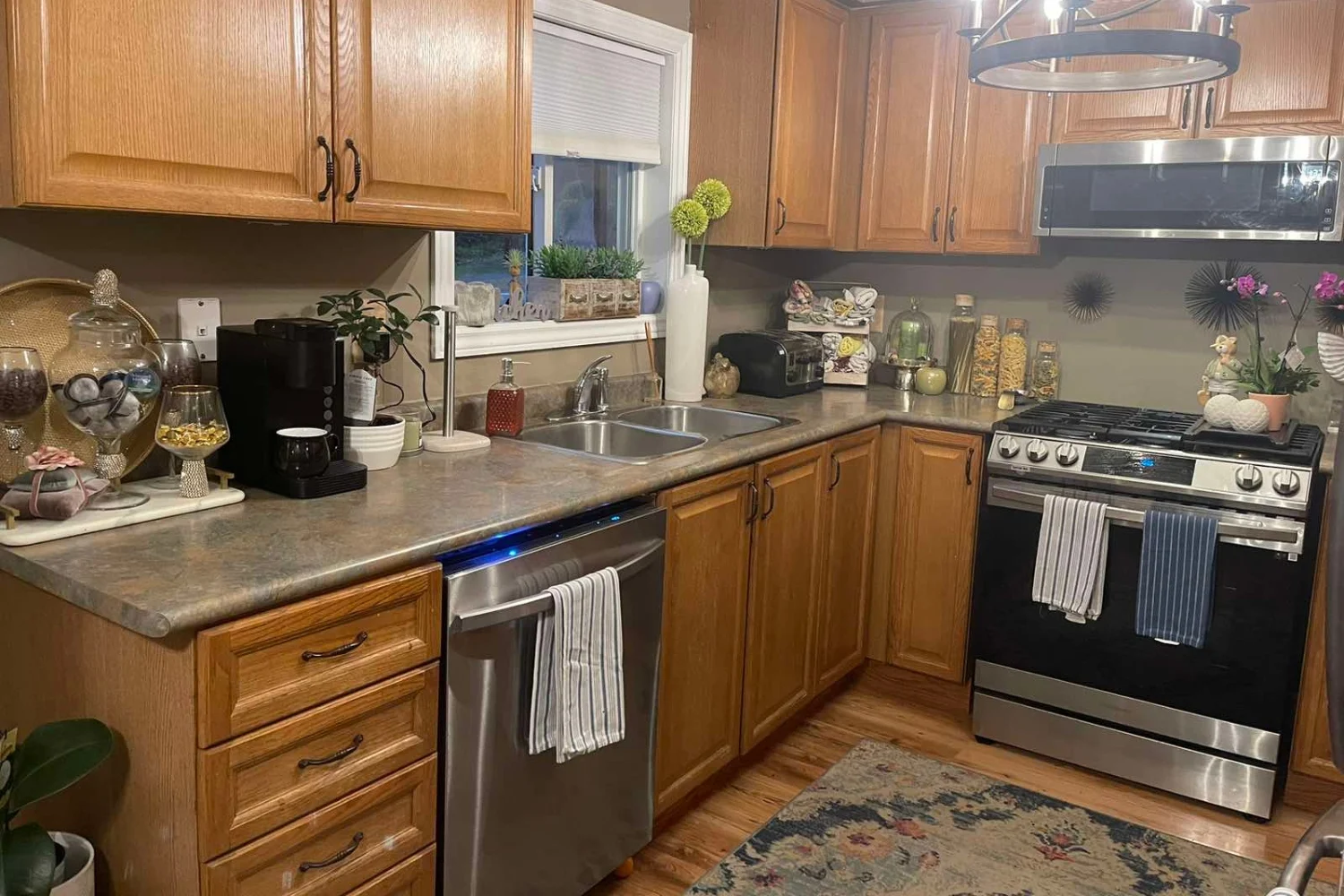
This matters because cross-contamination happens when hazards move from one surface to another, like from raw food to a countertop, and preventing that transfer is a key part of keeping food (and your home in general!) safe and avoiding illness.
From our experience cleaning homes across the GTA, cleaning without cross-contamination leads to healthier spaces and fewer surprises. Small changes done consistently make a real difference.