 Service Area
 residential

 commercial
 other services
Cleaning tips for homes with pets need to go beyond what works in pet-free households, because fur, odours, and the Lung Association of Ontario’s indoor air quality and allergen resources create challenges that regular products and routines do not fully address. GTA homes with dogs and cats deal with year-round shedding, muddy paw prints from wet Ontario winters, and the dander that affects indoor air quality, particularly during the months when windows stay closed. This guide covers what actually works, from the right vacuum filters to the safest cleaning products for homes where animals live.
The Lung Association of Canada notes that pet dander is one of the most common indoor allergens, and that it can linger in fabrics, carpets, and air ducts for months even after a pet is no longer present. For households managing allergies alongside pets, cleaning frequency and technique both matter. See the Lung Association of Ontario’s indoor air quality and allergen resources for guidance on managing indoor allergens.
In this article
This article is also available as a podcast. Hit play to listen while you work or commute. This player is fully compatible with screen readers and assistive technology.
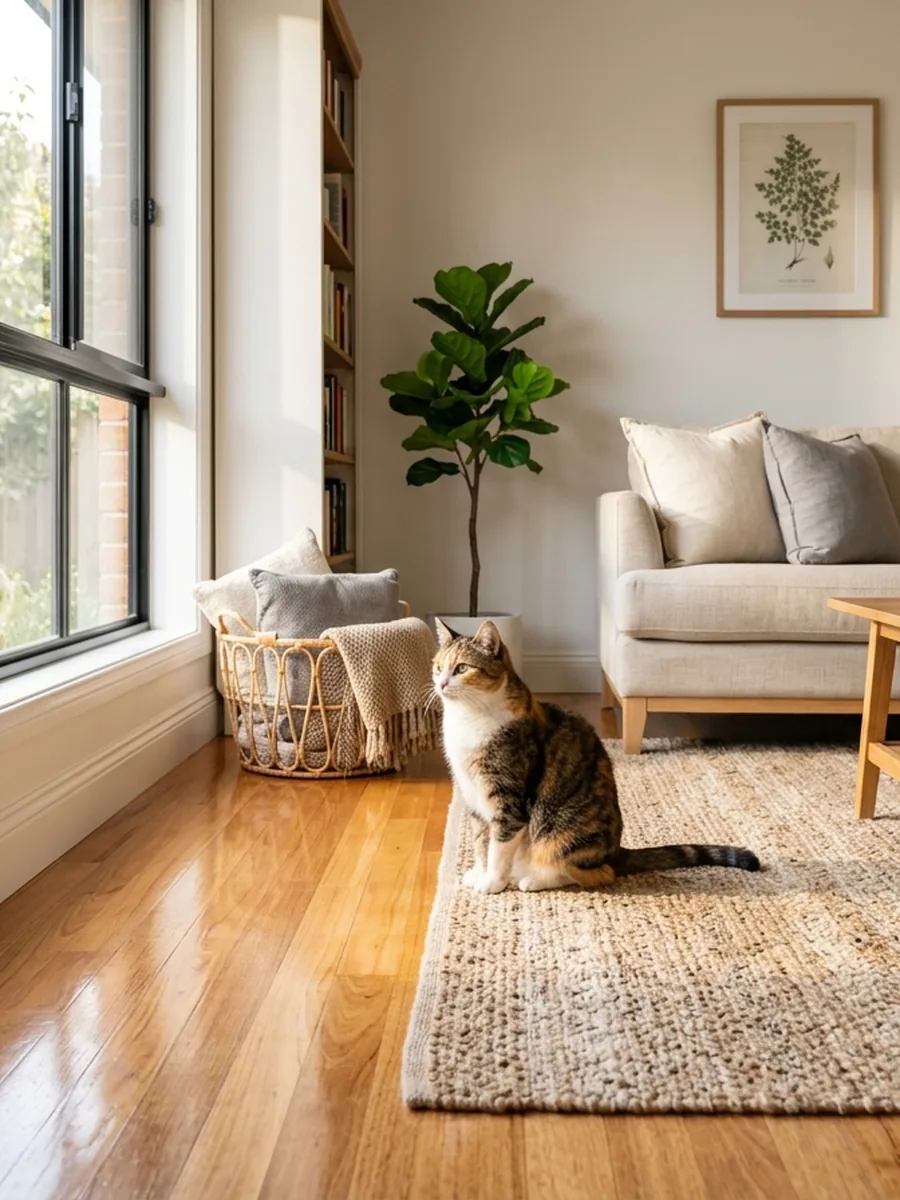
Managing pet fur on floors and furniture
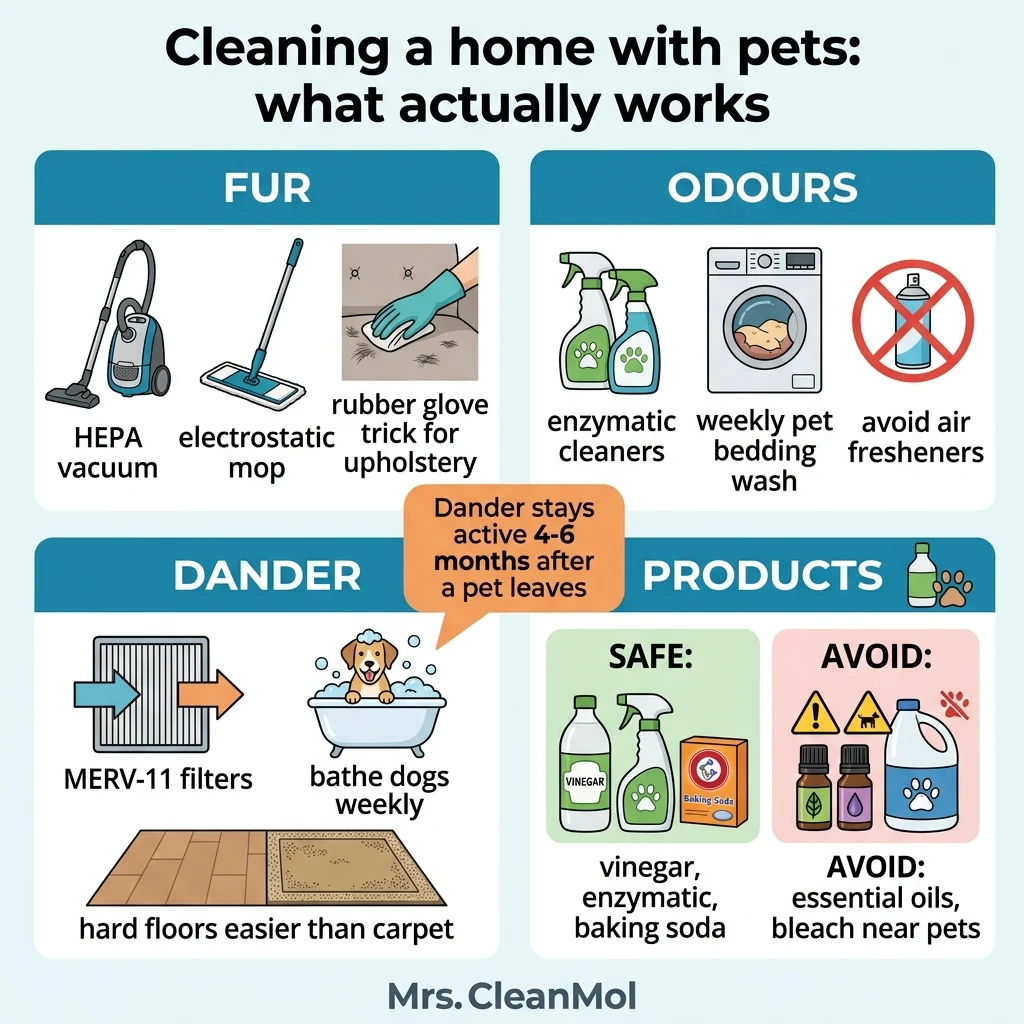
The single biggest upgrade for pet owners is a vacuum with a true HEPA filter and a motorized brush head. Standard vacuum heads spin fur into the air instead of collecting it. A motorized pet attachment grabs fur from carpet pile and upholstery fibers instead of just skimming the surface. For GTA households with heavy-shedding dogs, vacuuming every two days during shedding season (spring and fall) keeps the fur from migrating into every room.
On hardwood and tile, an electrostatic dry mop picks up pet hair better than a broom, which tends to scatter it. Follow the dry mop with a damp microfibre mop for a complete clean.
PRO TIP
For fur embedded in upholstery, dampen a rubber glove and run it across the fabric in one direction. The friction pulls fur out of the fibers into clumps you can pick up by hand. This works better on most sofas than a lint roller once fur is embedded.
Eliminating pet odours at the source
Pet odours come from two main sources: surface deposits (saliva, urine, anal gland secretions) and airborne particles that settle into fabrics. Masking with air fresheners does not work and often makes the problem worse by layering scents. Enzymatic cleaners are the effective approach, they contain enzymes that break down the proteins in pet waste and eliminate the how to remove stubborn stains from any surface in your home at a molecular level.
For carpets with old urine staining, saturate the area with an enzymatic cleaner (Nature’s Miracle and Rocco and Roxie are reliable brands available in Ontario), cover with plastic wrap, and leave it for several hours. The plastic keeps the cleaner from evaporating before the enzymes can work. Blot dry, do not rub.
Washing pet bedding weekly is one of the highest-impact habits for odour control. Pet beds accumulate body oil, saliva, and dander in ways that no amount of room spray can address. Hot water wash with an unscented detergent, and dry completely before returning to use.
Reducing dander for allergy households
Dander is shed skin cells, not fur. It is microscopic, stays airborne, and settles into every soft surface in a home. For households where someone has pet allergies, a few targeted habits make a real difference:
- Change furnace and air filters monthly rather than quarterly. A MERV-11 or higher filter captures more dander than standard filters.
- Bathe dogs regularly (weekly for high-dander breeds) and brush them outside to reduce how much dander enters the home.
- Keep pets out of the bedroom of anyone with allergies. Dander in bedding is a significant contributor to nighttime allergy symptoms.
- Hard floors in main living areas are easier to keep dander-free than carpet. If carpet removal is not an option, steam cleaning every two months reduces dander load significantly.
DID YOU KNOW
Pet dander can remain active in a home for four to six months after an animal is no longer present. It becomes embedded in upholstery, carpet fibers, and even wall surfaces. For allergy sufferers moving into a former pet household, a professional deep clean followed by carpet shampooing is worthwhile before moving in.
Pet-safe cleaning products vs standard products
| Product type | Pet safety | Effectiveness | Notes |
|---|---|---|---|
| White vinegar (diluted) | Safe when dry | Good for surfaces | Avoid on natural stone |
| Enzymatic cleaner | Safe | Best for odour/stains | Needs dwell time to work |
| Bleach-based cleaners | Toxic to cats especially | High effectiveness | Keep pets away until fully dry |
| Essential oil-based sprays | Many are toxic to pets | Moderate | Tea tree oil especially harmful to cats |
| Baking soda | Safe | Good deodorizer | Excellent for carpet odour how to keep your home clean between professional cleaning visits cleans |
Muddy paws and wet weather
Ontario spring brings weeks of wet, muddy conditions. A dedicated paw-wiping station at the back or side entry makes a real difference. A shallow tray of warm water, a stack of old towels, and a bottle of pet-safe paw wash kept by the door reduces the amount of mud and bacteria tracked through the home significantly. For dogs with heavy fur on their paws (golden retrievers, bernese mountain dogs, huskies), trimming the fur between the paw pads in spring reduces mud retention.
PEOPLE OFTEN ASK
How often should I clean my home with pets? For dog or cat households in the GTA, vacuuming twice a week, mopping weekly, and washing pet bedding every week or two keeps the home genuinely clean. More frequent if someone in the household has allergies. Pet homes typically benefit from a professional deep clean every two to three months rather than the standard three to six months.
For a deeper look at dust mites and allergens from pets in carpets, see our article on carpet dust mite removal and allergen reduction. Our residential cleaning services team regularly works in pet households across professional house cleaning services in Newmarket and the GTA and knows what actually needs attention.
Download the free quick guide
Save this as a PDF and keep it handy.
Frequently asked questions
What is the best way to remove pet hair from a sofa?
A damp rubber glove run across the fabric in one direction works better than a lint roller for embedded fur. For leather or microfibre sofas, a slightly damp microfibre cloth picks up fur well. Vacuuming with a motorized upholstery attachment before using the glove method gives the best results.
Are essential oil cleaning sprays safe to use around cats and dogs?
Many are not safe, particularly for cats. Tea tree, eucalyptus, citrus oils, and pine are toxic to cats even in diluted form. For pet households, unscented enzymatic cleaners and baking soda-based deodorizers are the safest options. Always check the product label and keep pets out of the area until surfaces are fully dry.
Why does my house still smell like dog even though I clean regularly?
The odour source is usually in soft furnishings, carpet, and the dog bed rather than hard surfaces. Regular vacuuming and wiping only addresses the surface. Deep-cleaning sofas and carpets with an enzymatic cleaner and washing the dog bed weekly addresses the actual source. Air filters also help: MERV-11 filters in your HVAC system capture more odour particles than standard ones.
How often should I bathe my dog to reduce allergens in the home?
For allergy households, weekly bathing reduces the amount of dander shed throughout the home significantly. For non-allergy households, every two to four weeks is typical depending on breed and activity level. Brushing outside before a bath reduces how much loose fur and dander enters the bathtub and bathroom.
What flooring is easiest to keep clean with pets?
Large-format tile and luxury vinyl plank (LVP) are the easiest. Both resist scratches better than hardwood and can be damp-mopped without damage. Tight-weave low-pile carpet is easier to vacuum than shag or berber for pet hair removal. High-pile carpet holds the most dander and is the hardest to keep clean in a pet household.
Our team cleans pet homes across Newmarket, Aurora, and Barrie every week. We know what products work in a house with animals and which ones to avoid. If you want a genuinely clean home without spending your weekend scrubbing, get a free cleaning quote.

Written by
Gisele F.
Eco-Home & Sustainable Living Specialist
Gisele is a Toronto-based writer and green living advocate specializing in eco-friendly home care. Her work focuses on non-toxic cleaning products, sustainable household routines, and improving indoor air quality for Canadian families.