 Service Area
 residential

 commercial
 other services

Getting deep clean kitchen tips right means going well beyond wiping the counters and running a sponge over the stovetop. A proper kitchen deep clean works through every appliance, surface, and hidden corner in a specific order, and most GTA homeowners find it takes two to three hours the first time they do it thoroughly. The good news is that once done properly, keeping it that way is much faster.
Kitchens accumulate Health Canada’s consumer product safety guidelines for household cleaning products, food residue, and bacteria in ways that other rooms do not. The area behind the stove, the inside of the fridge door gasket, the top of the refrigerator, and the inside of the microwave are the spots most people skip during regular cleaning but that genuinely need attention every few months.
In this article
This article is also available as a podcast. Hit play to listen while you work or commute. This player is fully compatible with screen readers and assistive technology.
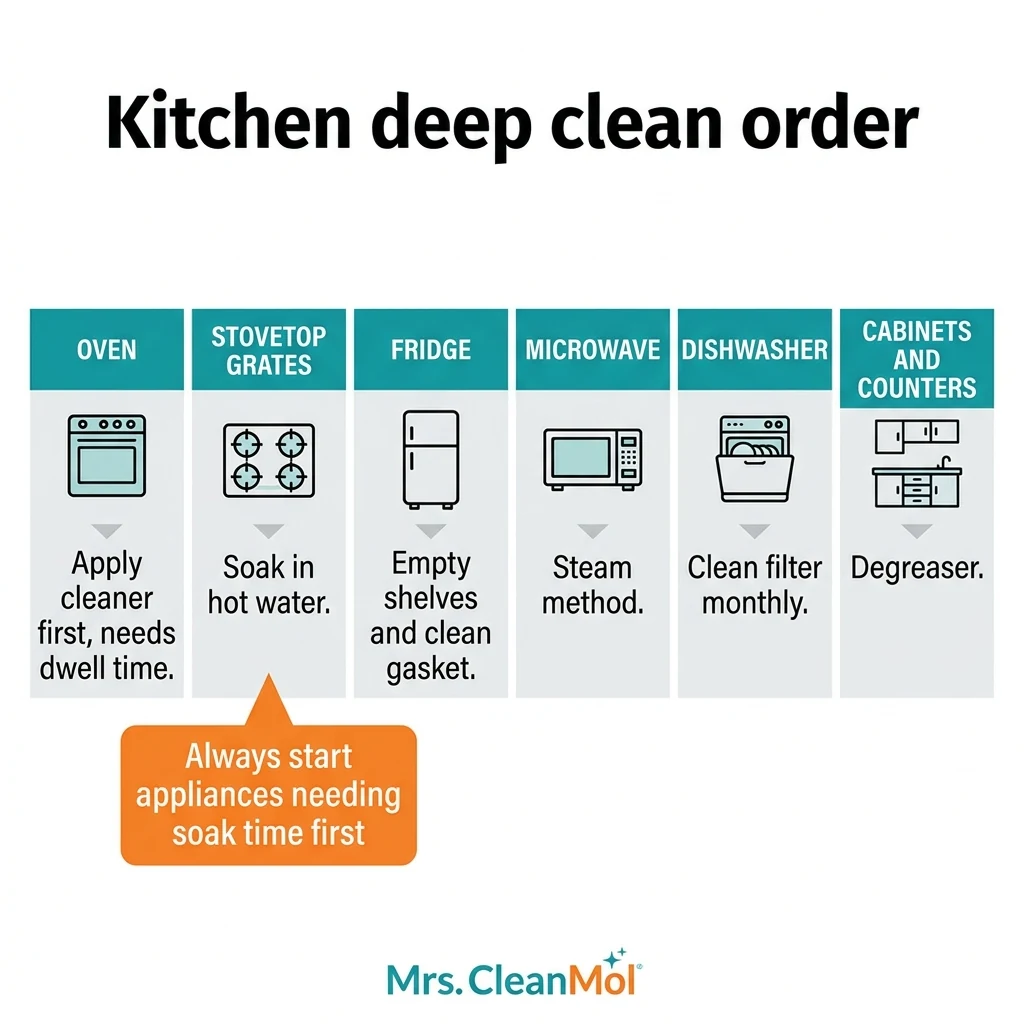
The right order for a kitchen deep clean
Start with the appliances that need soaking or long dwell times, then work through surfaces top to bottom, and finish with the floors. This avoids re-contaminating areas you have already cleaned.
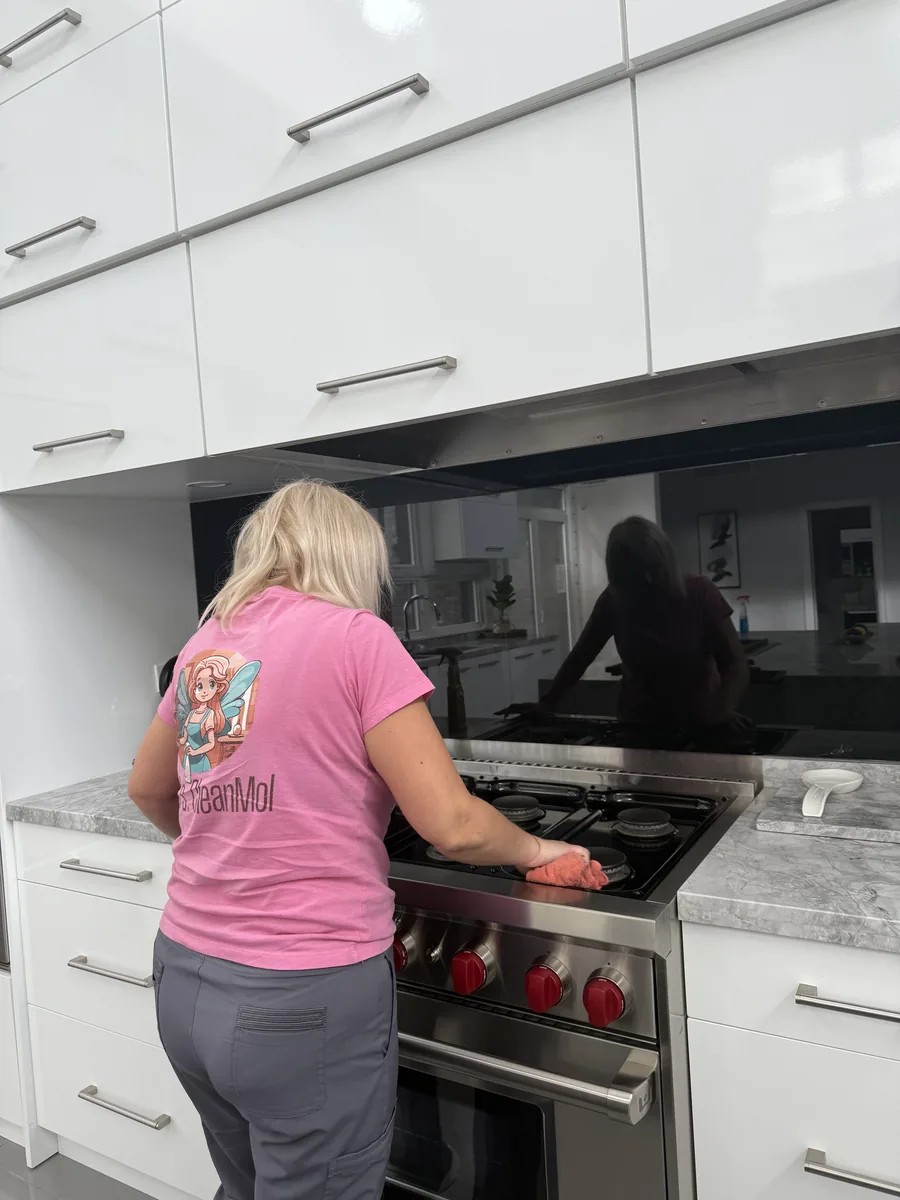
Oven and stovetop
If you have a self-clean cycle, run it the night before and wipe out the ash with a damp cloth the next morning. For manual cleaning, apply oven cleaner spray to the interior, close the door, and let it sit for 20 to 30 minutes. This gives you time to work on other areas.
For the stovetop, remove the burner grates and caps on gas stoves and soak them in hot soapy water in the sink. Wipe the stovetop surface with a degreaser, getting into the channels and around the burner ports. On electric or induction tops, use a razor blade scraper for burned-on residue, then follow with a glass-top cleaner.
PRO TIP
Place soaking burner grates in a large zip-lock bag with about 1/4 cup of ammonia and seal it overnight. The fumes dissolve baked-on grease with almost no scrubbing. Do this outside or in a ventilated space. Rinse well before returning to the stove.
Refrigerator
Remove all food and pull out every shelf and drawer. Wash them in warm soapy water and let them air dry. Wipe the interior walls, the door shelves, and the rubber gasket around the door seal with a mild cleaner. The gasket collects mould and food residue and is often the source of fridge odours.
Vacuum the condenser coils at the back or underneath the fridge. Dusty coils make the fridge work harder and increase energy use. Wipe the top of the fridge last as it tends to collect a layer of greasy dust from cooking vapour.
Microwave
Fill a microwave-safe bowl with water and a few slices of lemon or a tablespoon of white vinegar. Microwave on high for three minutes and let it sit for another five without opening the door. The steam loosens all the splatter inside. Wipe clean with a cloth. Remove and wash the turntable plate separately.
Dishwasher
Remove and clean the filter at the bottom of the dishwasher. Most owners never do this and it significantly affects cleaning performance. Run an empty cycle with a dishwasher cleaning tablet or a cup of white vinegar placed on the top rack. Wipe the door gasket and the control panel.
Cabinets and counters
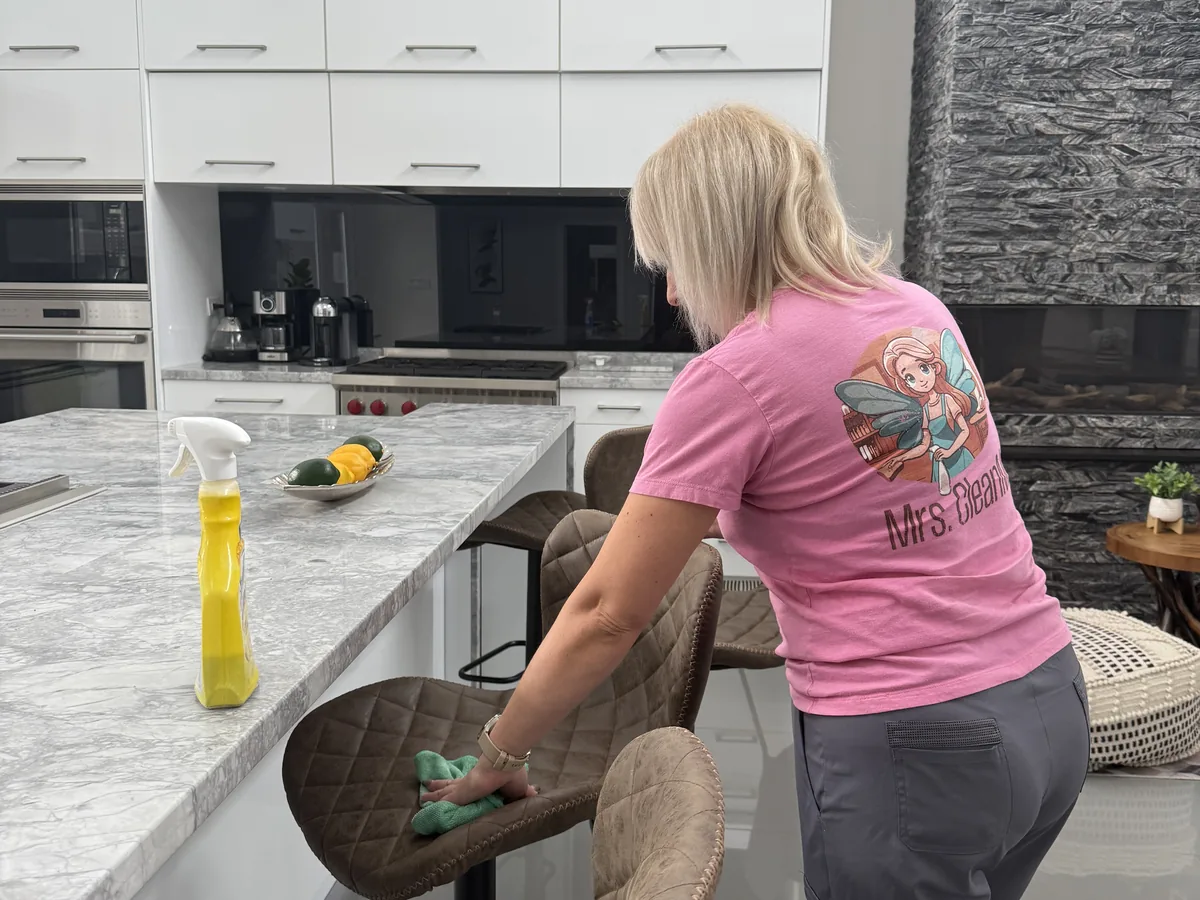
Cabinet faces collect cooking grease over time and develop a sticky residue that regular wiping does not fully remove. Use a degreaser spray, let it sit for a minute, then wipe with a damp cloth. Do not saturate wood or laminate cabinet doors.
Clear and wipe every counter section thoroughly. Move the toaster, coffee maker, and any other countertop appliances and clean underneath them. These spots accumulate crumbs and spills that never get touched during routine cleaning.
DID YOU KNOW
Studies on household bacteria have found that the kitchen sink has more bacteria per square inch than the toilet. The sponge and dish cloth are even worse. A weekly rinse of the sink with a diluted bleach solution and regular dishcloth changes go a long way for food safety.
DIY deep clean vs professional service
| Factor | DIY deep clean | Professional service |
|---|---|---|
| Time required | 2 to 3+ hours | 90 min to 2 hours (team of 2) |
| Supplies needed | You supply everything | Team brings all products |
| Appliance interiors | Depends on your effort | Included in deep clean service |
| Result consistency | Varies | Consistent every visit |
| Cost | Supplies only (~$15-$30) | $250 to $600 depending on home size |
Behind and beside the stove
Pull the stove away from the wall at least once during a deep clean. The gap beside and behind a stove accumulates grease, dropped food, and dust in ways that are genuinely surprising. Sweep and mop the floor there, and wipe the sides of the stove and the adjacent cabinet panels.
PEOPLE OFTEN ASK
How often should I deep clean my kitchen? Most kitchens in GTA homes benefit from a proper deep clean every two to three months. Regular cooking households may need it monthly. If you do weekly maintenance cleaning, the deep clean becomes much quicker because there is less buildup to address each time.
Kitchen floors and baseboards
Sweep or vacuum before mopping to avoid spreading debris. Pay attention to the gap between the base of cabinets and the floor, where crumbs and spills accumulate. Baseboards near the stove and under the sink get splattered more than others and are worth a focused wipe during a deep clean.
For a full schedule of what to clean and when across every room, see our guide on how often to clean each room in your home. If you would prefer to leave the kitchen deep clean to professionals, we cover residential cleaning services across Richmond Hill, professional house cleaning services in Vaughan, and the wider GTA.
Download the free quick guide
Save this as a PDF and keep it handy.
Frequently asked questions
What is the best degreaser for kitchen cabinets?
A diluted solution of dish soap and warm water works for light grease. For heavier buildup, a citrus-based degreaser or a product like Krud Kutter handles it well. Avoid anything too harsh on painted or laminate cabinet surfaces as it can strip the finish over time.
How do I remove baked-on grease from a stovetop?
Make a thick paste from baking soda and a little dish soap. Apply to the burned areas, let it sit for 15 to 20 minutes, then scrub with a non-scratch pad. For stubborn spots on cast iron grates, soaking in ammonia overnight in a sealed bag outdoors is the most effective approach.
How often should I clean the dishwasher filter?
Monthly is ideal for households that run the dishwasher daily. Remove the filter from the bottom of the machine, rinse it under warm water, and use a soft brush to remove trapped debris. A dirty filter is the most common reason dishes come out cloudy or smelling odd.
Is it safe to clean an oven with baking soda and vinegar?
Yes, it is effective for lighter soiling. Apply a baking soda paste to the oven interior, leave it overnight, then spray with vinegar and wipe clean. For heavy grease and carbon buildup, a commercial oven cleaner works faster and more thoroughly.
What should I use to clean a stainless steel sink without scratching it?
A soft cloth or sponge with dish soap handles everyday cleaning. For deeper cleaning, baking soda applied in the direction of the grain removes staining without scratching. Rinse well and dry to prevent water spots. Avoid steel wool or abrasive pads.
Kitchen deep cleans are one of the services our Richmond Hill and professional house cleaning services in North York clients book most often. If you would rather spend your weekend somewhere other than behind your stove, get a free cleaning quote from the Mrs. CleanMol team.

Written by
Megan H.
Home Management & Lifestyle Contributor
Megan is a Toronto-based writer specializing in practical cleaning, organization, and everyday home care for Canadian households. She provides real-life perspectives on maintaining efficient living spaces, with a focus on deep cleaning protocols and sustainable home management for busy families.