


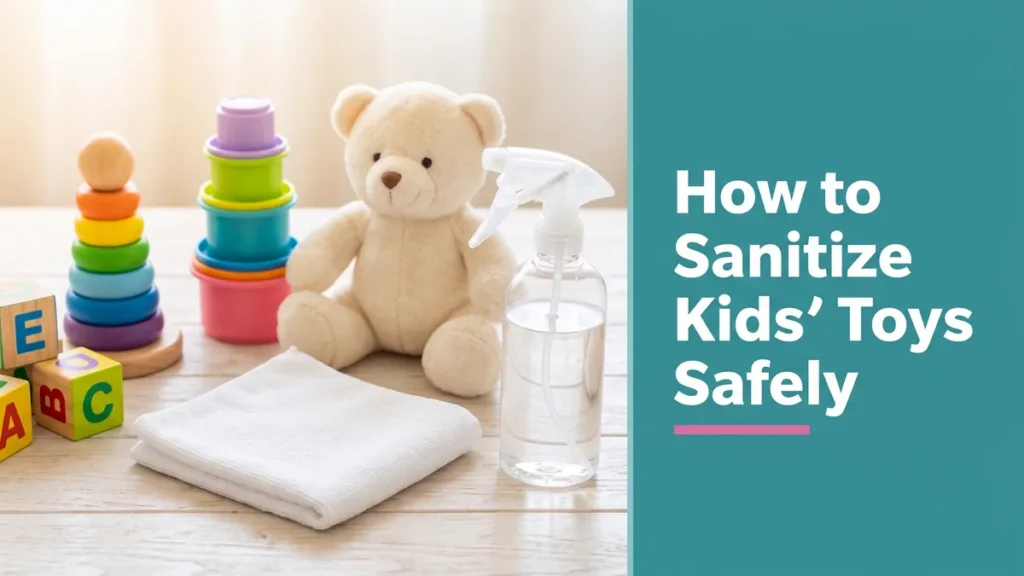
If your toddler chews, drops, and shares every toy in the house, you already know why you want to sanitize kids toys on a regular schedule. The catch is doing it safely, because the same harsh disinfectants that kill germs can leave residue on the things a child puts straight in their mouth. The goal is clean and germ-reduced without a chemical hangover. Families across the GTA rely on our residential cleaning service for exactly this kind of careful, health-minded cleaning.
Here is the part that surprises a lot of parents: for most everyday toys, you do not need heavy-duty disinfectant at all. Soap, water, and the right rinse handle the majority of the job. Below is how to do it by material, when to step up to a true disinfectant, and how to keep toys safe to hand back to little hands.
In this article
Cleaning, sanitizing, and disinfecting are not the same
These three words get used interchangeably, but they describe different levels of germ control, and knowing the difference tells you how far to go. Cleaning removes dirt, food, and grime with soap and water. Sanitizing reduces germs to a level considered safe. Disinfecting kills a much higher percentage of germs and is what you reach for after illness or a diaper-time mishap, not for daily play.
For most toys on a normal day, a good clean plus a sanitizing step is plenty. Save full disinfecting for when someone in the house has been sick, a toy has touched something truly dirty, or a baby’s toy has been on the floor at a playground or daycare.
Did you know
A toy that looks clean can still carry germs, and a toy drowned in disinfectant can leave residue a child then licks off. The safest routine is usually a two-step one: clean with soap and water first, then sanitize, and always rinse or wipe with plain water afterward so nothing chemical is left behind.
How to sanitize kids toys by material
The methods below are general guidance for household toys. Always follow the manufacturer’s care label, keep any cleaning product well out of children’s reach, never mix cleaning chemicals, and test on a small hidden spot first. Rinse or wipe every toy with plain water after sanitizing so no residue remains. CleanMol is not responsible for damage to items or for any reaction, and toys with a reachable battery compartment or electronics should never be submerged.
Hard plastic toys (blocks, cars, stacking cups)
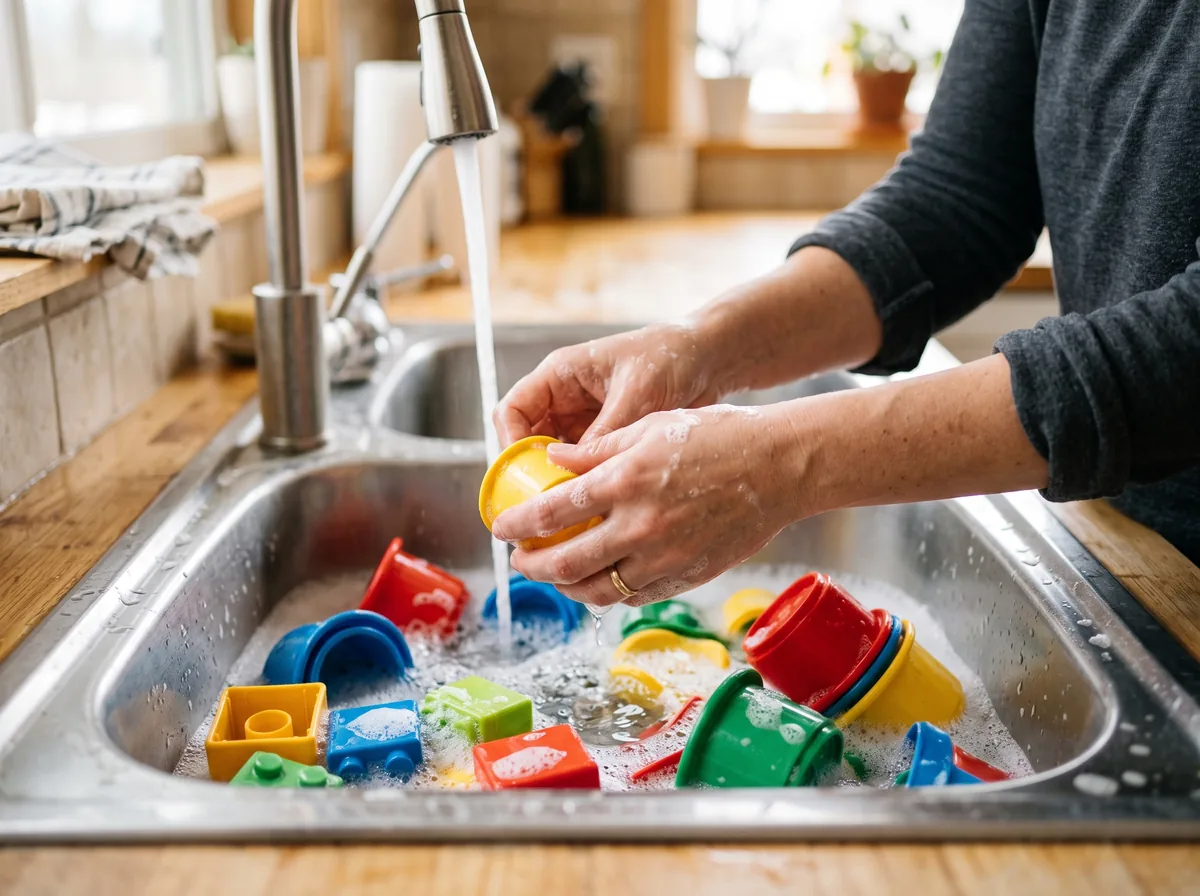
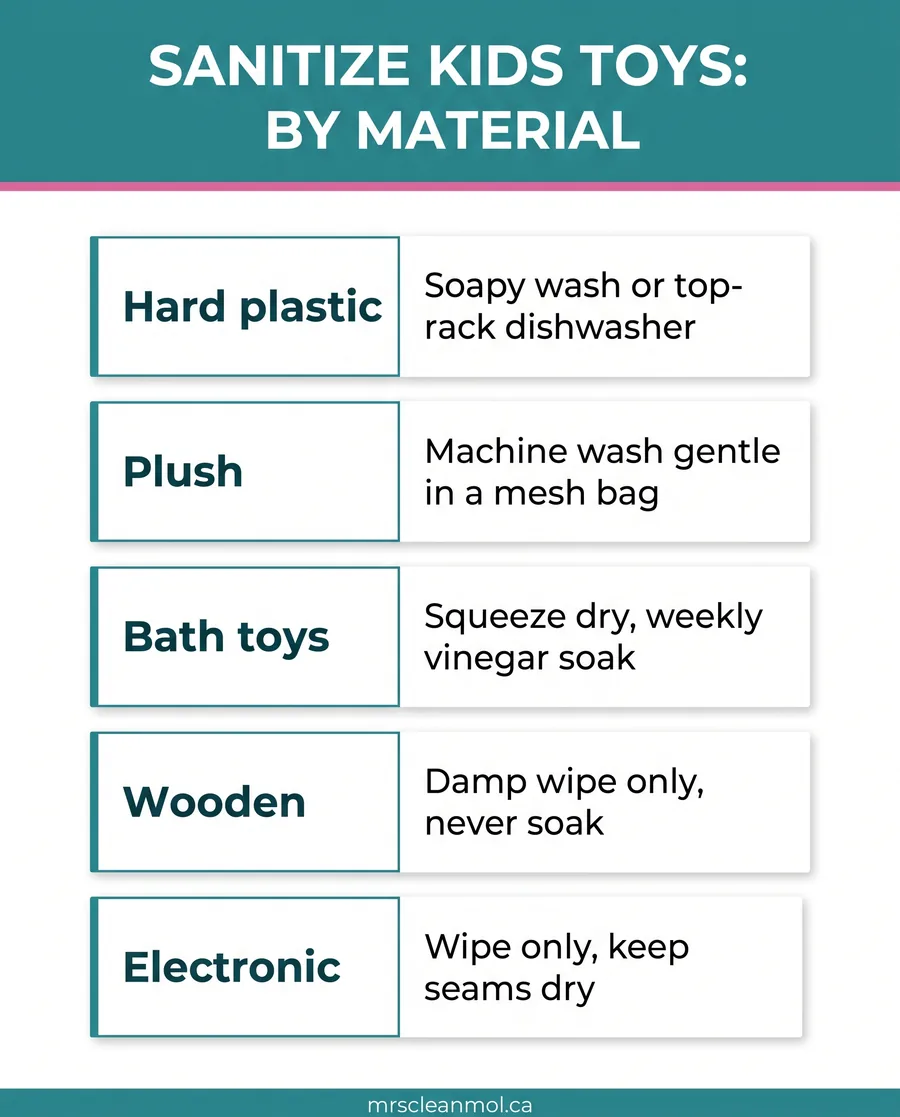
The easy ones. Wash with warm soapy water and a cloth or brush, rinse, then either wipe with a child-safe sanitizing solution or a diluted vinegar rinse and let air dry. Many hard plastic toys without batteries are also top-rack dishwasher safe, which sanitizes with hot water and no chemicals at all. Check the label first.
Plush and stuffed toys
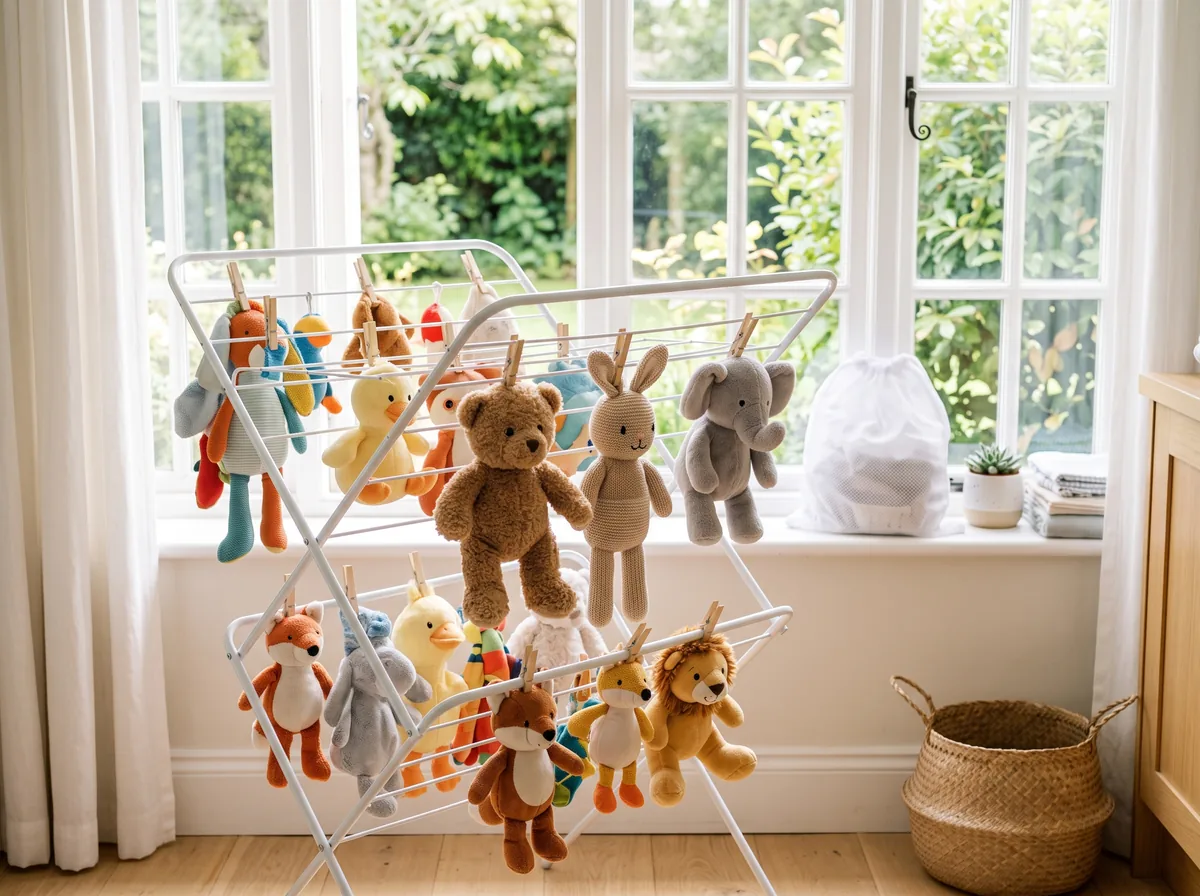
Most stuffed animals can go in the washing machine. Place them in a mesh bag or pillowcase, use a gentle cycle with a little mild detergent and warm water, then air dry or tumble on low if the label allows. For a toy that cannot be submerged, spot clean with a damp soapy cloth and let it dry fully in the sun.
Bath toys (the moldy squirters)
Bath toys are the sneakiest, because water trapped inside grows mold you cannot always see. Squeeze out all the water after each bath, and once a week soak them in warm water with a splash of white vinegar, squeeze the solution through the hole a few times, then rinse and dry completely. If black mold keeps coming back inside a squirter, retire it.
Wooden toys
Never soak wood, since it swells, cracks, and can grow mildew. Instead, wipe with a well-wrung damp cloth and a little mild soap, follow with a cloth dampened in a diluted vinegar solution to sanitize, then dry right away. Let wooden toys air dry fully before they go back in the bin.
Electronic and battery toys
Keep these out of the sink entirely. Wipe the surfaces with a cloth lightly dampened with soapy water, then a cloth with plain water, keeping moisture away from the battery door, speakers, and seams. A slightly damp disinfecting wipe works for high-touch buttons, just wring it out first and finish with a plain-water wipe.
Skip the bleach on mouthed toys
For toys a baby routinely puts in their mouth, skip strong bleach solutions as a default. If you ever do use a diluted bleach sanitizer for a sick-day deep clean, follow the label’s dilution exactly, let it air dry, then rinse thoroughly with plain water before the toy goes anywhere near a child.
How often should you do it?
There is no single rule, but a simple rhythm keeps things manageable without turning cleaning into a full-time job. Match the frequency to how the toy is used and who has touched it.
- Daily or after each use: teethers, pacifier-style toys, and anything a baby actively mouths.
- Weekly: everyday favourites, bath toys, and hard plastic toys in heavy rotation.
- Every couple of weeks: plush toys and items that get lighter handling.
- Right away, with a disinfecting step: after any illness in the house, or after a playdate, daycare, or public play space.
Pro tip
Rotate toys in and out of storage. Fewer toys in play at once means fewer to clean each week, and children often play more happily with a smaller, rotating selection. It is a small trick that cuts your sanitizing load in half.
Method by toy type at a glance
When you are not sure which method a toy needs, this quick reference sorts it out. When in doubt, the manufacturer’s care label always wins.
| Toy type | Best method | Submerge? | How often |
|---|---|---|---|
| Hard plastic (no battery) | Soapy wash or top-rack dishwasher, then air dry | Yes | Weekly |
| Plush / stuffed | Machine wash gentle in a mesh bag, air dry | Yes (wash) | Every 1 to 2 weeks |
| Bath toys | Squeeze dry, weekly vinegar soak, rinse | Yes | Weekly |
| Wooden | Damp soapy wipe, vinegar wipe, dry at once | No | As needed |
| Electronic / battery | Wipe only, keep moisture off seams | No | As needed |
Quick take
Soap and water first, sanitize second, rinse third. That order handles almost every toy safely. Only reach for a true disinfectant after illness or genuinely dirty contact, and always rinse it off before playtime.
Keeping it safe for little hands
Sanitizing is only helpful if the toy is safe to hand back. Store all cleaning products locked away and well out of reach, keep an eye on toy condition while you clean, and pull anything with cracks, loose parts, or mold that will not clear. Damaged toys are both a germ trap and a choking or safety hazard. It also pays to keep an eye on Canada’s recalls and safety alerts database, since a toy occasionally comes off the market for reasons cleaning cannot fix. For guidance on using household cleaners around children, the American Academy of Pediatrics is a good resource.
Save your money
You rarely need specialty toy-cleaning sprays. Mild dish soap, white vinegar, and warm water handle the vast majority of toy sanitizing for pennies, and they are gentler on the toys and on your child than a cupboard full of single-use products.
Download the free quick guide
A one-page guide to safely sanitizing toys by material, plus a simple how-often schedule.
Frequently Asked Questions
Between work, kids, and everything else, keeping the whole home clean and healthy is a lot. Get in touch for a family-friendly cleaning plan that fits your household.