



In this article
Most surface damage in a home does not come from neglect. It comes from cleaning the wrong way with good intentions, the vinegar that etched a stone counter, the steam mop that warped a hardwood floor, the abrasive pad that left a haze on a glass cooktop. The short version: harsh acids, abrasives, and chemical mixes ruin more surfaces than dirt ever does, and most of it is avoidable once you know the traps. Below are the six mistakes we see most often on the homes our residential cleaning crews look after, each with the damage it causes and the safer fix.
This is not a list of products to fear. It is about matching the method to the material, because a cleaner that is perfect on glass can quietly destroy marble, and a tool that saves time on a sink can scar a tub. Get these six right and your floors, counters, and finishes last years longer with less effort, not more.
Mistake 1: Using Vinegar on Everything
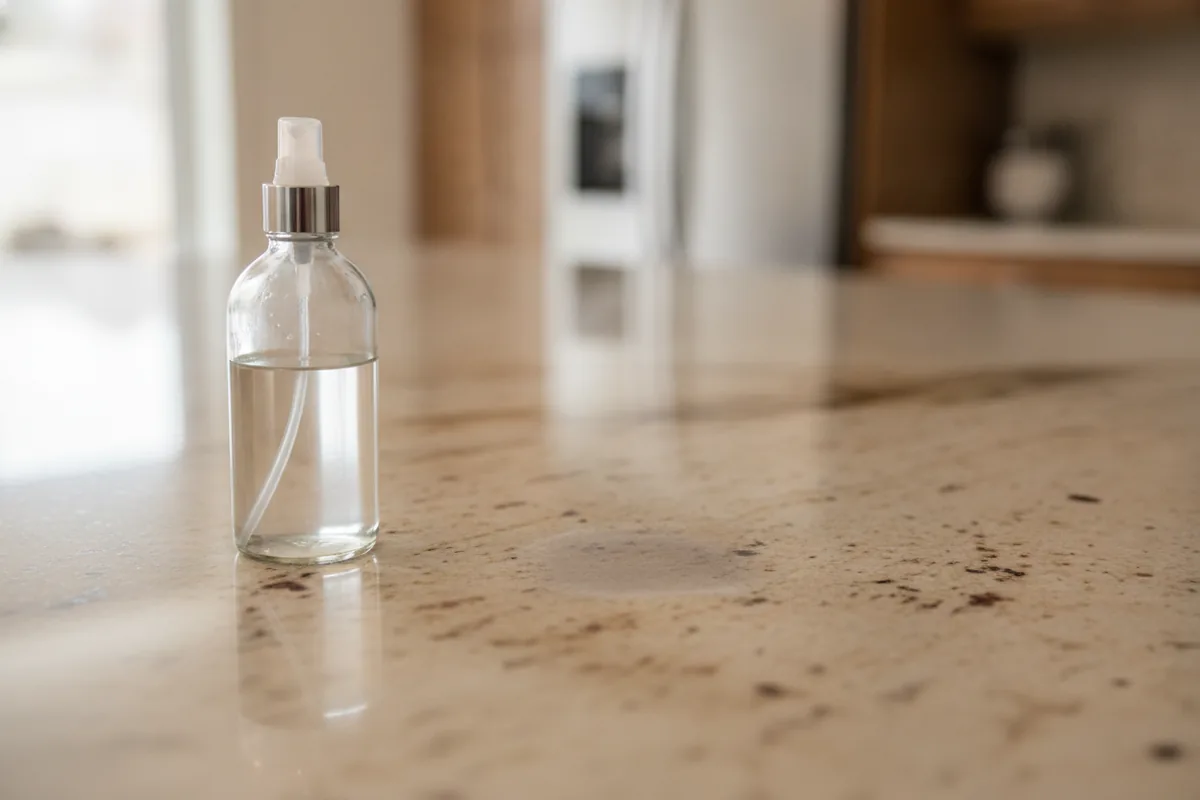
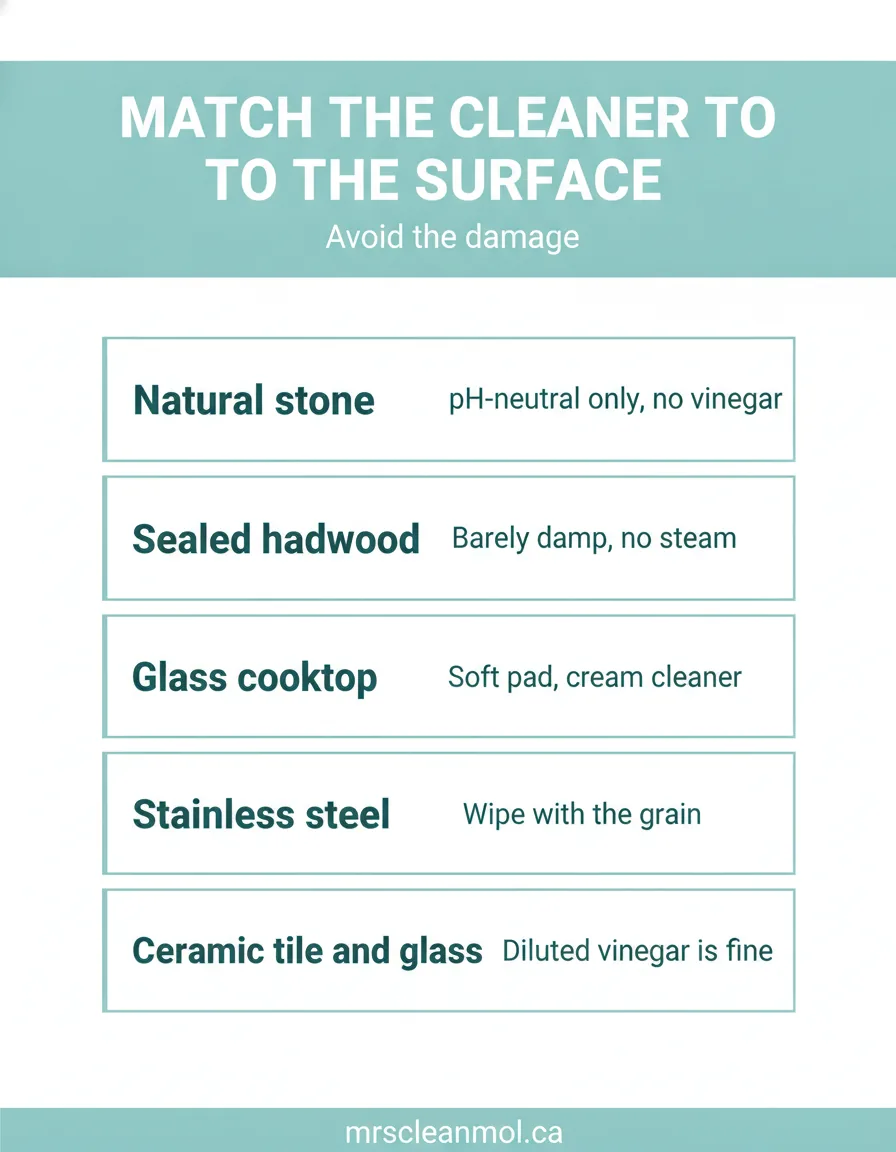
Vinegar earned a reputation as the do-anything natural cleaner, and that is exactly where the trouble starts. It is an acid, and acid does not care that your intentions are good. On natural stone, granite, marble, slate, and travertine, vinegar etches the surface and leaves dull spots that polishing cannot undo. The Natural Stone Institute is blunt about it: keep acidic cleaners off stone entirely and use a pH-neutral product made for the material.
The same acid that etches stone can strip the finish on sealed hardwood and corrode rubber gaskets in appliances over time. Vinegar still has its place, on glass, ceramic tile, and as a deodorizer, but it is not a universal cleaner. The fix is simple: before you reach for vinegar, ask what the surface is made of. If it is stone, wood, or anything with a delicate coating, choose a cleaner labelled for that material instead.
Did you know?
Etching and staining are two different kinds of stone damage. A stain sits in the stone and can sometimes be drawn out. Etching is a chemical burn to the surface itself, caused by acids like vinegar, lemon, or wine, and it usually needs professional refinishing to repair. That is why prevention matters so much more than any cleaning trick.
Mistake 2: Mixing Cleaning Products
This is the mistake that can send someone to the hospital, not just dull a countertop. Mixing bleach with ammonia, or bleach with vinegar, releases toxic gases that are genuinely dangerous to breathe in a closed bathroom or kitchen. People do it hoping for extra cleaning power, but combining products usually cancels out their effects rather than boosting them. Public health agencies, including the CDC, warn against it for good reason.
The rule is one product at a time. If you switch cleaners on the same surface, rinse with water in between and open a window or run the fan. When a single cleaner is not cutting through grime, the answer is more contact time or a product better matched to the job, never an improvised blend. Read the label, keep products in their original bottles, and treat any cleaner that warns against mixing as exactly that serious.
People often ask: what about “natural” combinations like vinegar and baking soda?
They are not dangerous, but they are not the powerhouse the internet promises either. Combine vinegar and baking soda and they mostly neutralize each other into salty water and fizz. The bubbling looks impressive and can help lift loose debris from a drain, but as a cleaning paste it is far weaker than either one used on its own. Use them separately for the surfaces each actually suits.
Mistake 3: Soaking Hardwood Floors
Wood and standing water are old enemies. One of the most common ways people damage hardwood is mopping it with a soaking-wet mop or, worse, a bucket of water and a splash of something acidic. Water seeps into the seams between boards, swells the wood, and lifts the finish, and a steam mop adds heat that drives moisture right past the seal. The damage shows up as cupping, gaps, and a cloudy finish months later.
The safe method is dry first, damp second. Vacuum or dust-mop to lift grit that would otherwise scratch the finish, then use a barely damp microfibre mop with a cleaner made for sealed wood, drying any standing water immediately. We cover this in detail in our guide on cleaning hardwood floors without streaks or damage, but the headline is the same: less water, more frequent passes, and never a steam mop on wood.
The same logic applies to laminate and many luxury vinyl floors, which look tough but have seams that wick water just as readily. When in doubt, treat any wood-look floor as if water is the enemy, because for the layers underneath, it usually is.
Mistake 4: Scrubbing Delicate Surfaces Raw
There is a satisfying logic to scrubbing harder when something will not come clean, and it is wrong more often than it is right. Abrasive powders, scouring pads, and stiff brushes leave a field of fine scratches on glass cooktops, acrylic and fibreglass tubs, stainless appliances, and sealed stone. Those micro-scratches dull the surface, trap dirt so it looks grimy faster, and on a cooktop they can become permanent cloudy patches.
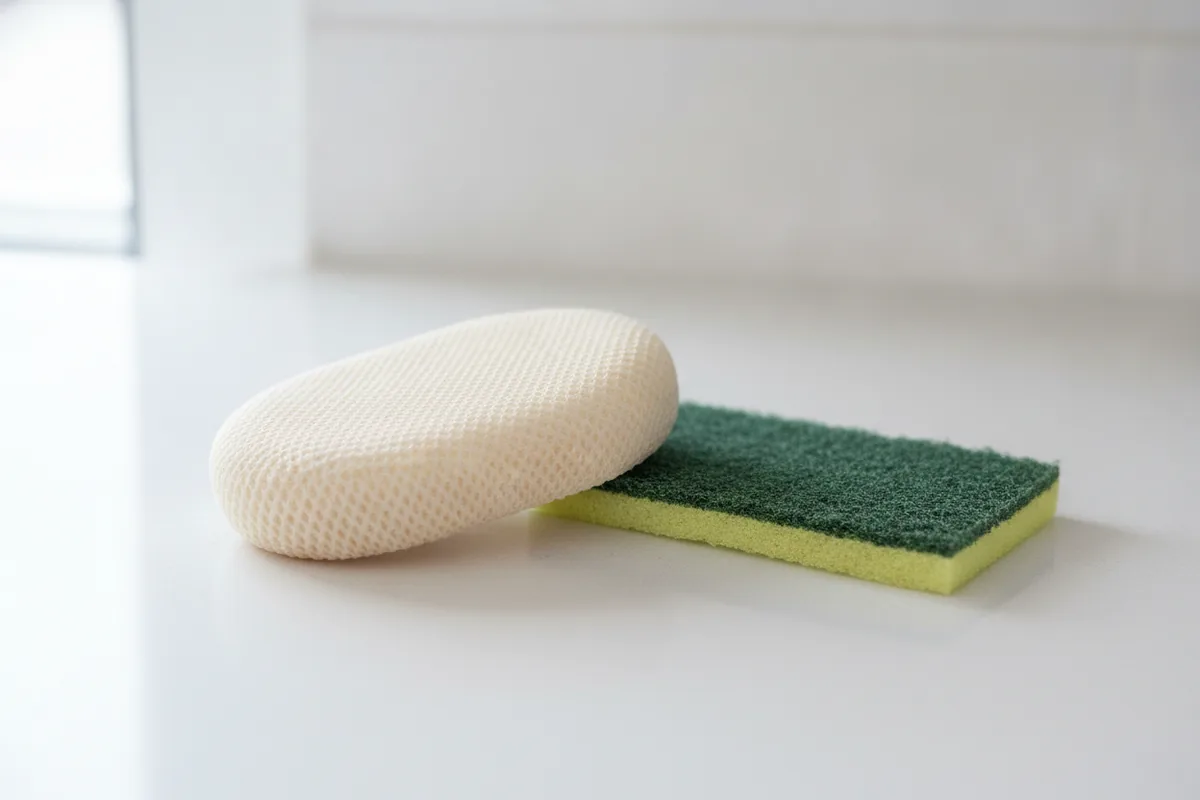
Start with the softest tool that has any chance of working and only step up if you must. A non-scratch sponge and the right cleaner, given a minute to do its job, beats brute force on almost every delicate surface. For a stubborn mess, let a suitable cleaner sit and soften the grime rather than grinding at it. The goal is to remove the dirt, not a layer of the surface along with it.
Pro tip
Keep two pads in your cleaning kit and never confuse them: a soft non-scratch sponge for cooktops, tubs, stone, and finished surfaces, and a coarser pad reserved only for cast iron, stainless sinks, and the rare baked-on oven job. Colour-coding them takes seconds and saves you from absent-mindedly taking the rough pad to a surface that cannot survive it.
Mistake 5: Skipping the Dwell Time
Spray, wipe, done. It feels efficient, but wiping a cleaner off the second it lands is one of the quietest reasons surfaces never look properly clean, and it pushes people toward harsher scrubbing to compensate. Disinfectants and degreasers need contact time, often several minutes, to actually break down grime and kill germs. Wipe too soon and you have smeared the dirt around rather than removed it. For sanitizing, this matters even more, since safer-choice and standard disinfectants only do their job if the surface stays wet for the time the label specifies.
The fix costs nothing but patience. Spray the surface, leave the room to do something else for a few minutes, then come back and wipe. The cleaner does the work, you do less of it, and you avoid reaching for abrasives to make up for a job that was rushed. This single habit improves results across the whole house, from the bathroom to the kitchen counters.
Mistake 6: One Cloth for the Whole House
Using the same cloth and the same bucket of water from the bathroom to the kitchen does not just spread dirt, it spreads bacteria across the exact surfaces where you prepare food. A cloth that wiped a toilet area and then a counter has moved germs, not removed them. Cross-contamination is a real hygiene problem, and it is invisible, which is what makes it easy to ignore.
Work clean to dirty, top to bottom, and use separate cloths for bathrooms, kitchens, and general surfaces, ideally colour-coded so they never get mixed up. Change your cleaning water when it turns grey, and wash cloths in hot water between uses. If keeping all of that straight across a busy home sounds like a second job, our house cleaning team in Toronto and across the GTA builds these habits into every visit so you do not have to think about them.
Please note: This article is general cleaning guidance only. Always follow the manufacturer’s instructions for your surfaces and products, never mix cleaning chemicals, and test any cleaner on a small hidden area first. CleanMol is not responsible for damage from products or methods used at home. For valuable stone or delicate finishes, consult a specialist.
Download the free quick guide
Save this as a PDF to keep on hand.
Frequently asked questions
Sources and references
- Natural Stone Institute – Caring for natural stone
- U.S. EPA – Safer Choice cleaning products
- Centers for Disease Control and Prevention – Hygiene and cleaning basics
The takeaway: before you clean anything, ask what the surface is, pick the gentlest method that works, never mix products, and give cleaners time to do their job. Get those four right and you stop trading clean surfaces for damaged ones. If you would rather have it handled correctly the first time, CleanMol has protected GTA and Simcoe County homes for over a decade. Contact us and we will tailor a plan to your home’s surfaces.