 Service Area
 residential

 commercial
 other services
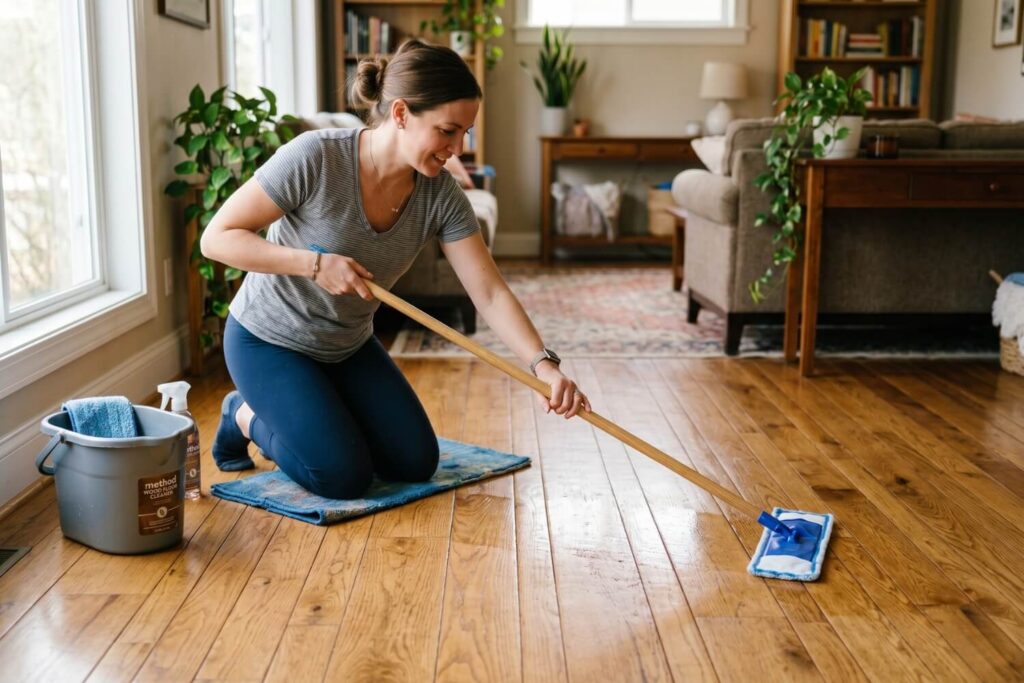
Cleaning hardwood floors without causing streaks or damage starts with understanding what actually harms them: too much water, acidic cleaners like vinegar, steam mops on unsealed wood, and harsh abrasives. Cleaning in GTA homes with hardwood that deal with salt and grit tracked in through winter, humidity fluctuations between heated winters and air-conditioned summers, and the typical wear from shoes and pets, can be difficult. Getting the cleaning right protects both the finish and the wood underneath!
Most hardwood problems, including streaks, cloudiness, and dull patches, are caused by using too much cleaner, not drying the floor quickly enough, or using the wrong products. This guide covers what works, what to avoid, and how to clean wood floors by type.
In this article
This article is also available as a podcast. Hit play to listen while you work or commute. This player is fully compatible with screen readers and assistive technology.
Know What Type of Hardwood You Have
The cleaning approach depends on whether your hardwood is sealed or unsealed, and what kind of finish it has. Most hardwood floors in GTA homes built after the mid-1990s have a polyurethane or aluminum oxide finish and are sealed. Older homes may have oil or wax finishes that need different care. When in doubt, test in a corner: drop a tiny bit of water on the floor. If it beads up, the floor is sealed. If it absorbs, it is unsealed or oil-finished.
The Right Tools
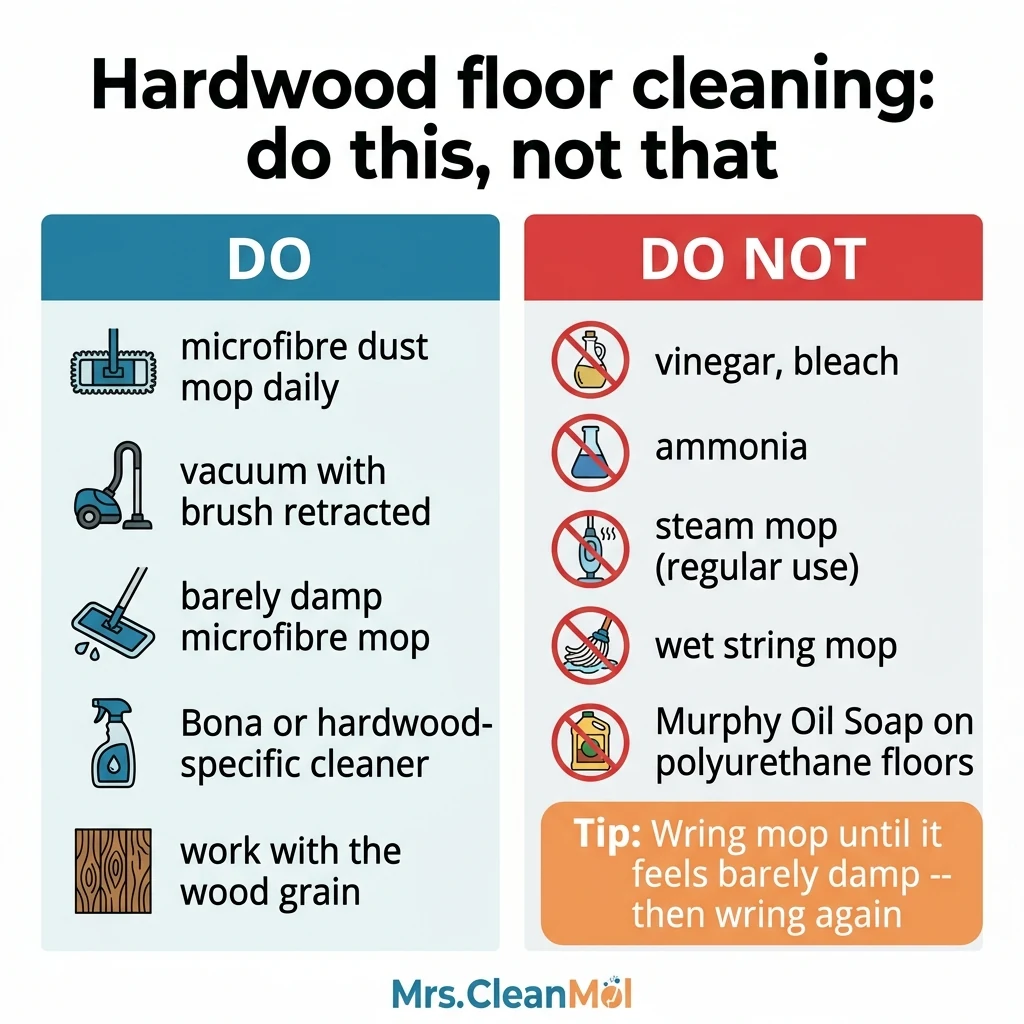
For daily or routine cleaning: a microfibre dust mop or a vacuum with a bare floor setting (retracted brush roll). Hard bristle vacuums on hardwood can leave fine scratches over time. For damp cleaning: a microfibre flat mop with a spray function or a very slightly dampened mop. The mop should be almost dry when it touches the floor.
PRO TIP
Wring out a microfibre mop until it feels barely damp to your hand. Then wring it out again. That level of moisture is enough to clean hardwood without risking water penetrating the finish or sitting on joints between boards.
What Not to Use On Hardwood Floors
- Vinegar or vinegar-based solutions: Acidic and breaks down polyurethane finish over time. A common DIY recommendation that damages floors slowly.
- Bleach or ammonia: Both strip finish and cause discolouration.
- Steam mops: Safe only on properly sealed floors, but even then the repeated steam exposure can weaken joints and cause warping over time. Not recommended by most flooring manufacturers.
- Wet string mops: Leave too much water on the floor. Standing water is hardwood’s enemy.
- Oil soap on polyurethane finishes: Murphy’s Oil Soap is designed for unfinished or oil-finished wood. On polyurethane floors it leaves a residue that builds up into a dull, streaky film.
DID YOU KNOW
Bona is the most widely recommended hardwood floor cleaner by flooring contractors across Ontario. It is pH-neutral, residue-free, and designed specifically for polyurethane-finished hardwood. It is available at most Canadian Tire and Home Depot locations in the GTA.
Cleaning Methods Compared
| Method | Best for | Risk to hardwood | Result |
|---|---|---|---|
| Microfibre dust mop (dry) | Daily dust and pet hair | None | Excellent for daily maintenance |
| Vacuum (bare floor setting) | Grit, sand, crumbs | Low if brush retracted | Good for removing abrasive particles |
| Damp microfibre mop | Weekly clean, light soil | Low if used correctly | Best overall for regular cleaning |
| Steam mop | Sealed floors only, occasional | Medium, can loosen joints over time | Good for deep clean, not recommended regularly |
| Wet string mop | Not recommended for hardwood | High, leaves too much water | Causes swelling, warping, cloudiness |
Step-by-step: Cleaning Hardwood Floors The Right Way
1. Sweep or dust mop first to remove loose debris. Grit and sand act like sandpaper on hardwood finish when dragged by a mop.
2. Vacuum along the grain of the wood to pull debris from between boards.
3. Mop with a barely damp microfibre mop and a hardwood-safe cleaner like Bona. Work in the direction of the wood grain in sections. Do not let water pool anywhere.
4. Dry any wet spots immediately. In high-humidity periods common in Ontario summers, a fan directed at freshly mopped floors helps.
PEOPLE OFTEN ASK
How do I fix streaks on hardwood floors after cleaning? Streaks are usually caused by either too much cleaning product or the wrong product. Buff the streaky area with a dry microfibre cloth. If the streaks persist, they may be a product residue buildup. Clean with plain warm water on a barely damp mop to cut through the residue, then dry immediately.
Salt and Grit Damage
Road salt tracked in on boots is one of the biggest hardwood floor issues in GTA homes through winter. Salt crystals are abrasive and also leave a white residue that dulls the finish. A good door mat, a boot removal policy at the entry, and wiping the entry floor after snowy days all help significantly. For salt residue that has already dried on the floor, dampen a microfibre cloth with plain warm water and wipe the affected area. The water dissolves the salt. Dry immediately.
For a complete guide on what to clean and in what order throughout a home, see our article on the the best order to clean a home room by room. Our residential cleaning services team serves Aurora, Newmarket, and the wider GTA.
Download the free quick guide
Save this as a PDF and keep it handy.
Frequently asked questions
Why do my hardwood floors look dull after cleaning?
Dullness after cleaning is almost always caused by product residue buildup. If you use a cleaner that leaves any residue (Murphy Oil Soap is a common culprit on polyurethane floors), it builds up over time into a hazy film. The fix is to mop with plain warm water to dissolve and remove the residue layer. It may take two or three passes. Switch to a residue-free cleaner like Bona.
Can I use a Swiffer on hardwood floors?
Yes, the dry Swiffer is fine for daily dust and pet hair pickup. The Swiffer WetJet is acceptable on sealed hardwood if used with the dry setting or a barely damp pad. Avoid soaking the floor. The Swiffer hardwood floor cleaner solution is pH-neutral and generally safe for polyurethane finishes.
How often should I clean hardwood floors?
Dust mop or vacuum in high-traffic areas every two to three days. A damp mop clean once a week is typical for most GTA households. Heavily used areas near the kitchen and entry may need a quick damp wipe every few days. Monthly, check for any scratches or spots where the finish is wearing and address with a spot repair product.
How do I remove a water stain from hardwood floors?
Fresh water marks often buff out with a dry microfibre cloth. For dried white water rings, a small amount of mayonnaise or petroleum jelly rubbed into the mark and left for a few hours sometimes removes it by reintroducing oils into the dried finish. Dark water stains that go through the finish into the wood itself may require sanding and refinishing.
Is it safe to use a robot vacuum on hardwood floors?
Yes, most robot vacuums set to bare floor mode are safe for hardwood. Avoid models with stiff spinning side brushes that scratch the finish. Emptying the dustbin frequently reduces the chance of it dragging grit across the floor on a subsequent pass.

Written by
Megan H.
Home Management & Lifestyle Contributor
Megan is a Toronto-based writer specializing in practical cleaning, organization, and everyday home care for Canadian households. She provides real-life perspectives on maintaining efficient living spaces, with a focus on deep cleaning protocols and sustainable home management for busy families.